
You saw “IDGAF” in a text, paused for a second, then probably thought, “Wait… was that rude or just internet slang?” Yeah, that happens a lot. The phrase pops up everywhere now — TikTok comments, Snapchat streaks, gaming chats, Instagram captions, and chaotic group texts at 2 a.m.
What makes it confusing is the tone. Sometimes it sounds funny. Other times it sounds cold, aggressive, or wildly dramatic. Context changes everything.
And honestly? A lot of people use IDGAF without fully understanding how strong the phrase actually sounds.
This guide breaks it all down in plain English. No robotic dictionary explanations. Just real meaning, examples, texting culture, platform-specific usage, and the situations where using IDGAF can either make you sound confident… or completely disrespectful.
What Does IDGAF Mean?
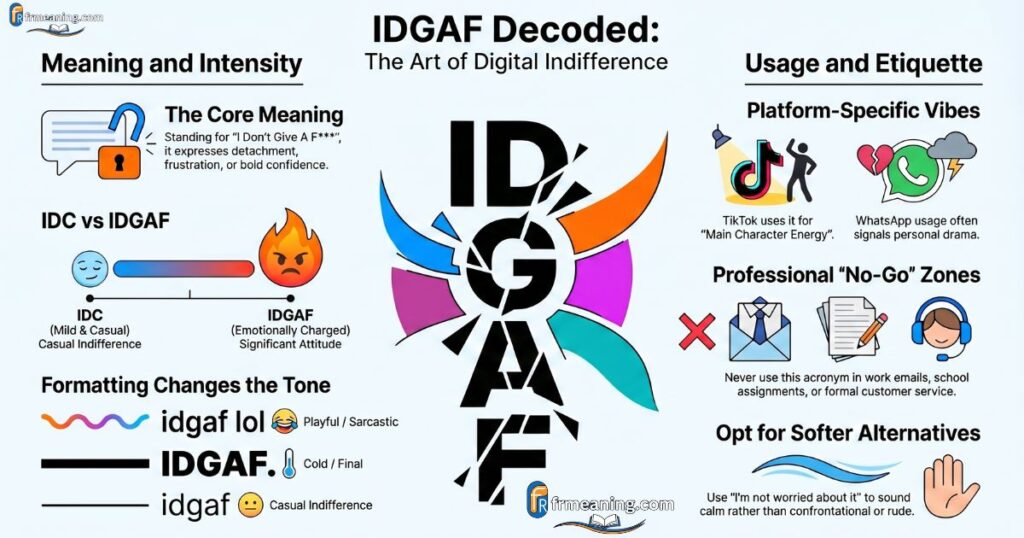
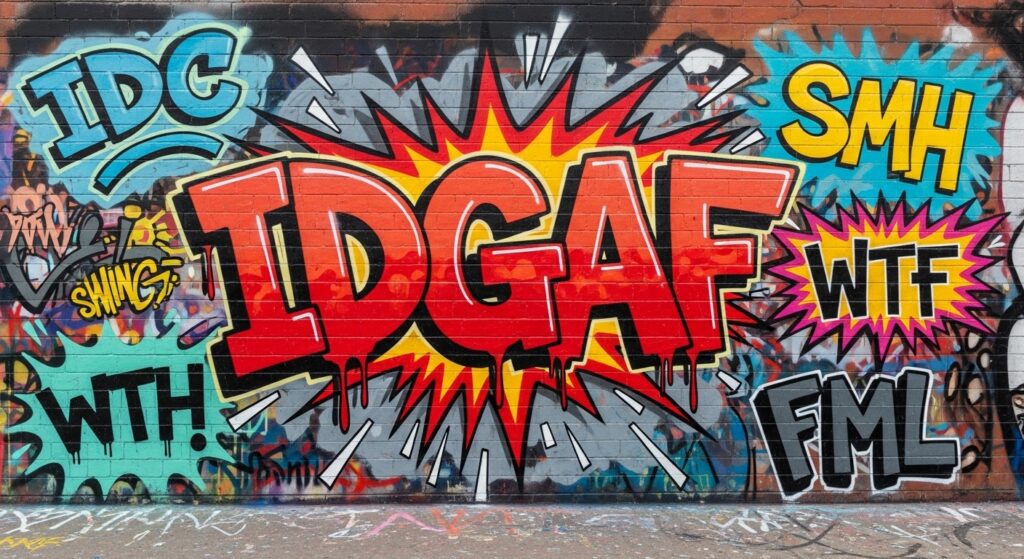
IDGAF is a popular internet slang acronym that stands for “I Don’t Give A F***.” People use it in text messages, social media posts, TikTok captions, and online chats to express strong indifference, confidence, frustration, or emotional detachment. The phrase is informal and can sound funny, rebellious, or rude depending on the tone and conversation context.
Full Form of IDGAF
IDGAF stands for:
“I Don’t Give A F*.”**
The phrase is an internet slang acronym used to express strong indifference, emotional detachment, frustration, or confidence. In simple terms, the person is saying they do not care about something at all.
It belongs to the same family of texting abbreviations as:
- IDK
- IDC
- TBH
- FR
- LOL
You’ll often see it mixed with other modern slang terms too. If you regularly decode internet acronyms, you might also want to learn the ASF meaning in slang chats because it frequently appears beside emotional expressions like IDGAF.
Simple Definition in Texting
In regular texting, IDGAF usually means:
- “I seriously don’t care.”
- “That doesn’t bother me.”
- “I’m done worrying about it.”
- “People can think whatever they want.”
The wording is blunt. That matters.
Someone texting “IDC” sounds casual. Someone texting “IDGAF” sounds emotionally charged. There’s more attitude behind it.
For example:
“People keep talking about me but IDGAF anymore.”
That sentence carries frustration and confidence at the same time.
Why People Use IDGAF Online
People rarely use IDGAF just to communicate information. They use it to express emotion.
Usually one of these:
- Rebellion
- Confidence
- Anger
- Emotional exhaustion
- Sarcasm
- Humor
- Defensiveness
Social media amplified this kind of language. Platforms reward dramatic reactions. Bold phrases get attention faster than calm ones.
That’s why IDGAF became deeply tied to:
- Meme culture
- TikTok captions
- Online arguments
- Viral quotes
- “Main character energy” posts
You’ll even notice overlaps with other emotional internet phrases like FW meaning in chat conversations, especially in casual Gen Z communication.
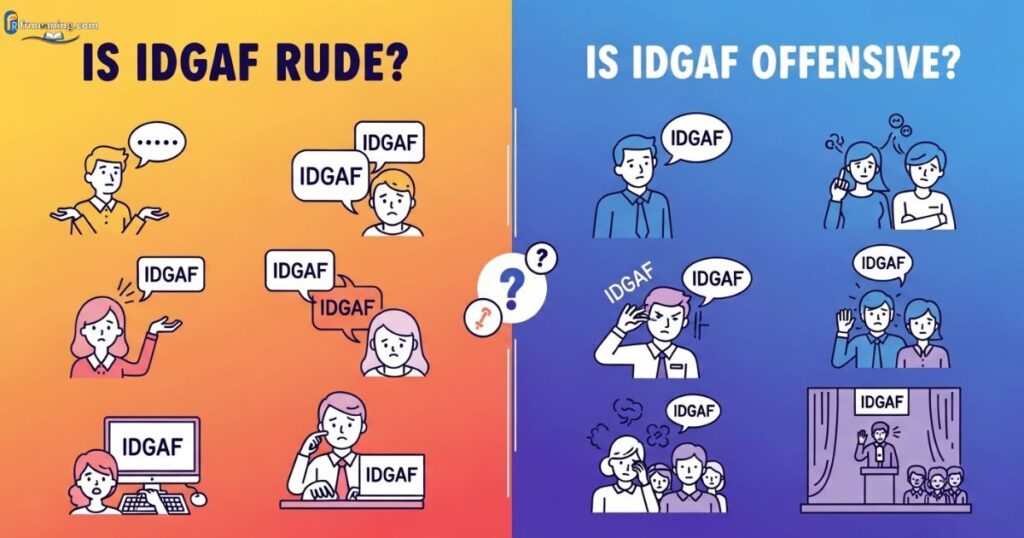
Is IDGAF Rude or Offensive?
Understanding the Tone Behind IDGAF
Short answer? Yes. It can absolutely sound rude.
The acronym contains profanity, even when abbreviated. Most people instantly recognize what the letters mean.
Tone depends on:
- Your relationship with the person
- The conversation topic
- The platform
- The emotional context
Here’s the interesting part though: online culture softened the phrase over time.
Among close friends, “IDGAF” might sound playful or dramatic rather than hostile.
Example:
“I’m wearing pajamas to the store. IDGAF.”
That feels humorous.
But this?
“IDGAF what you think.”
Completely different energy. Much sharper.
When It Sounds Funny vs Aggressive
Here’s a quick breakdown.
| Situation | Tone |
|---|---|
| Joke with friends | Funny |
| Meme captions | Dramatic |
| Relationship arguments | Aggressive |
| Gaming chats | Competitive |
| Workplace chat | Inappropriate |
| TikTok videos | Confident/Rebellious |
Delivery matters too.
ALL CAPS changes the emotional intensity:
- “idgaf” feels casual
- “IDGAF” feels louder and angrier
Punctuation changes tone as well:
- “idgaf lol” = playful
- “IDGAF.” = final and cold
Tiny differences. Huge impact.
Situations Where You Should Avoid Using It
There are places where IDGAF simply does not belong.
Avoid using it in:
- Work emails
- Professional messaging apps
- School assignments
- Conversations with teachers
- Customer service chats
- Formal introductions
- Serious family discussions
Even online, some people see the phrase as immature or disrespectful.
If you want to sound calm instead of confrontational, softer alternatives work better:
- “I’m not worried about it.”
- “It doesn’t bother me.”
- “I’m okay either way.”
- “I don’t mind.”
IDGAF Meaning Across Social Media Platforms
IDGAF Meaning on Snapchat
On Snapchat, IDGAF usually appears in:
- Private chats
- Story captions
- Emotional streak posts
- Relationship drama
Snapchat language moves fast. Messages disappear quickly, which encourages more emotional and impulsive communication.
Examples:
- “People switched up. IDGAF anymore.”
- “Missed my streak? idgaf honestly.”
Sometimes it’s serious. Sometimes it’s performative drama for attention.
Both happen constantly.
IDGAF Meaning on TikTok
TikTok transformed IDGAF into a personality trait.
You’ll see creators use it to signal:
- Confidence
- Independence
- Emotional toughness
- Rebellious behavior
- “I do what I want” energy
Common TikTok caption styles:
- “Cut my hair at 3am idgaf”
- “Skipping class again IDGAF”
- “They hate me but idgaf”
A lot of TikTok slang overlaps with abbreviations like ATP meaning in text culture, where tone and emotion matter more than literal grammar.
IDGAF Meaning on Instagram
Instagram usage feels more curated.
People often use IDGAF in:
- Selfie captions
- Gym transformation posts
- Breakup quotes
- Fashion content
- Attitude-based reels
Examples:
- “Living my life. IDGAF.”
- “Soft heart. Hard mindset. IDGAF.”
Instagram slang tends to blend confidence with aesthetics. The phrase becomes part of a persona.
IDGAF Meaning on WhatsApp
WhatsApp conversations are usually more personal, so IDGAF can hit harder there.
In close friend groups, it may sound harmless:
“IDGAF what movie we watch.”
In arguments, though, it can escalate tension quickly:
“You never listen and honestly IDGAF anymore.”
Tone becomes more emotionally direct because WhatsApp conversations often involve people you know personally.
IDGAF Meaning in Text Messages
Regular texting sits somewhere in the middle.
The phrase commonly appears when someone wants to:
- End a debate
- Show frustration
- Look emotionally detached
- Sound confident
- Hide insecurity
And yes, sometimes people use it even when they obviously do care.
That contradiction is part of internet culture now.
Real Examples of IDGAF in Conversations
Casual Friend Chat Examples
Here’s how IDGAF appears naturally in casual texting.
Example 1
Friend: “Everyone’s dressing fancy tonight.”
You: “idgaf I’m wearing sneakers.”
Example 2
“I failed the quiz but honestly IDGAF anymore.”
Example 3
“People gossip too much. IDGAF.”
These examples sound informal and emotionally expressive, not necessarily hostile.
Funny Meme Examples
Internet humor thrives on exaggeration.
Meme captions often use IDGAF dramatically:
- “Eating cereal at midnight like IDGAF”
- “Me ignoring responsibilities because IDGAF”
- “My sleep schedule said goodbye and I said IDGAF”
This kind of usage is exaggerated for comedy rather than literal emotional detachment.
Argument or Drama Examples
Here’s where the phrase becomes risky.
Examples:
- “Say whatever you want. IDGAF.”
- “You hurt me so much that now I genuinely IDGAF.”
- “Block me then. IDGAF.”
These feel emotionally aggressive because the phrase dismisses the other person entirely.
Flirty or Sarcastic Usage
Sometimes the phrase appears in teasing conversations.
Example:
“You’re cute and IDGAF who knows it.”
Or sarcastically:
“Wow, another gym selfie. IDGAF obviously.”
Context determines whether it lands as funny or rude.
IDGAF vs Similar Slang Terms
IDGAF vs IDC
This comparison matters because people confuse them constantly.
| Slang | Meaning | Emotional Strength |
|---|---|---|
| IDC | I Don’t Care | Mild |
| IDGAF | I Don’t Give A F*** | Strong |
IDC sounds casual.
IDGAF sounds intense.
Example:
- “IDC what we eat.”
- “IDGAF what they think about me.”
Huge emotional difference.
IDGAF vs IDAF
IDAF means:
“I Don’t Actually Care” or sometimes a shorter variation of the stronger phrase.
It’s less common online. Many users treat it as a toned-down version of IDGAF.
IDGAF vs IGAF
IGAF means:
“I Give A F*.”**
Completely opposite meaning.
People often use it sarcastically:
“Yeah because I totally IGAF.”
Sarcasm dominates internet communication now, which makes slang interpretation harder for non-native speakers.
IDGAF vs TBH
TBH means:
“To Be Honest.”
TBH introduces honesty.
IDGAF expresses indifference.
You’ll often see both together:
“TBH IDGAF anymore.”
That combination usually signals emotional frustration.
If you enjoy decoding social media abbreviations, understanding what HY means in text messages also helps because these slang terms frequently appear in the same conversations.
Who Commonly Uses IDGAF?
Gen Z and Internet Culture
Gen Z normalized rapid-fire slang communication.
Short acronyms fit perfectly into:
- Fast texting
- TikTok captions
- Gaming chats
- Meme formats
- Comment sections
The language feels emotional, fast, and expressive.
That’s the appeal.
Gaming and Meme Communities
Gaming culture uses emotionally intense slang constantly.
Competitive environments create exaggerated reactions:
- “IDGAF if we lose.”
- “Bro really said IDGAF after throwing the match.”
Meme culture amplified this style even more. Hyperbole became the default communication format online.
Social Media Influencers
Influencers often use IDGAF to build a bold image.
It communicates:
- Confidence
- Authenticity
- Independence
- Rebellious energy
Whether genuine or performative, the phrase signals emotional toughness.
At least publicly.
Should You Use IDGAF?
When It’s Appropriate
IDGAF works best in:
- Casual conversations
- Friend group chats
- Humor-based content
- Meme culture
- Informal online spaces
It can sound funny, relatable, or emotionally honest when used carefully.
When It Can Cause Problems
The phrase becomes problematic when:
- The other person feels dismissed
- The setting is professional
- The conversation is emotionally sensitive
- You barely know the person
- Tone gets misunderstood through text
Remember something important about texting culture:
People cannot hear your voice.
A phrase you intended as playful might sound harsh to someone else.
Safer Alternatives to IDGAF
Want the same meaning without sounding aggressive?
Try these:
- “I’m not worried about it.”
- “It doesn’t bother me.”
- “I’m over it.”
- “I’m fine either way.”
- “I’m not stressing about that.”
You still communicate indifference without sounding hostile.
Frequently Asked Questions About IDGAF
What does IDGAF mean from a girl?
Usually the same thing it means from anyone else: emotional detachment, frustration, confidence, or indifference. Tone matters more than gender.
What does IDGAF mean from a guy?
Typically it signals confidence, emotional distance, annoyance, or rebellious humor. Context changes the emotional intensity completely.
Can IDGAF be positive?
Yes. Sometimes people use it positively to express confidence or freedom from social pressure.
Example:
“I finally started living for myself and IDGAF what people think.”
Is IDGAF bad language?
Technically yes because it includes profanity. Some people consider it offensive while others see it as normal internet slang.
What are polite alternatives to IDGAF?
Better alternatives include:
- “I don’t mind.”
- “It’s not important to me.”
- “I’m okay with whatever.”
- “I’m not concerned about it.”
Final Thoughts on IDGAF Meaning in Text
IDGAF is more than just another texting abbreviation. It’s emotional shorthand.
Sometimes it signals confidence. Sometimes frustration. Sometimes fake indifference hiding real feelings. Internet slang works that way now — messy, emotional, layered, and deeply tied to online culture.
The biggest mistake people make is assuming every acronym has one fixed tone. It doesn’t. Context controls everything.
A funny Snapchat caption, a heated WhatsApp argument, and a TikTok meme can all use the exact same phrase while meaning completely different things emotionally.
So if you see IDGAF in a message, don’t just decode the letters. Read the mood behind them too.