

Ever scrolled through TikTok and seen someone comment “the edge on this fit 😭” and had absolutely no clue what they meant? Yeah, same. Edge meaning slang has basically taken over youth culture right now, and if you’re not chronically online, it’s easy to feel a little lost.
This word pops up everywhere in comment sections, in Gen Z group chats, even in how people describe a song or an outfit. So let’s actually break it down properly, no fluff, and figure out what edge really means, where it came from, and why it won’t stop trending.
What Does “Edge” Mean in Slang?
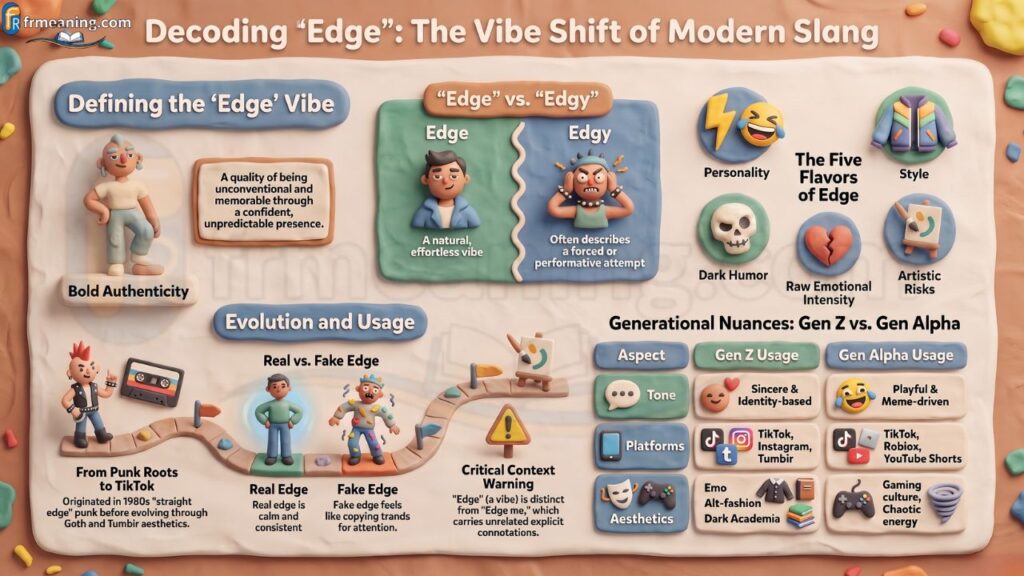
In short, edge in slang describes a quality of being bold, intense, or a little unconventional — the kind of vibe that makes someone (or something) memorable. It’s not really about looks alone; its more about presence. Someone with edge just carries themselves differently, whether thats through their personality, their fashion choices, or the way they crack jokes.
A person with personality edge might come across as confident, unpredictable, or just hard to read in a good way. Someone with style edge wears stuff that breaks away from what’s “normal” — think leather jackets, dark makeup, or bold accessories that make people look twice.
And edge in humor? That’s the sarcastic, slightly dark joke that catches you off guard and makes you laugh before you even process it.
Edge → signals → authenticity and confidence, and that’s basically the core of why people chase this vibe in the first place.
Common interpretations of edge include:
- A rebellious attitude that doesn’t follow the crowd
- A creative edge in art, music, or writing
- A risk-taking personality that isn’t afraid of judgement
- Emotional intensity that feels raw and real, not performed
Edge Meaning Slang on TikTok
On TikTok, edge meaning slang usually shows up in captions or comments describing outfits, transitions, or someone’s overall aesthetic. If a video has a “punk edge” or “dark academia edge,” it basically means the content has a bold, non-mainstream visual style that stands out from typical trends.
TikTok didn’t invent the word, honestly, but it definitely gave it rocket fuel. Short-form video made it super easy for creators to show edge instead of just talking about it — a 15 second clip of someone’s outfit, their attitude, or even their editing style can scream “edge” without a single word being said.
Trends move fast on the app, so edge became this catch-all label people slap on anything that feels intentionally different from the algorithm-friendly, cookie-cutter content most people post.
Edge Meaning Slang in English (General Usage)
Outside of TikTok, edge meaning slang in English carries a similar sense but is used a bit more broadly in everyday conversation, not just online trends. You’ll hear people describe someone’s writing as having “an edge,” meaning it feels sharp, honest, or a little provocative. Same with music reviews — critics often say a song has “punk edge” or “emotional edge” to describe intensity without saying it directly.
This is actually one thing competitor articles kind of gloss over — they treat edge like it’s purely a Gen Z internet term, but honestly it’s been part of informal English for decades. It just got a glow-up thanks to social media.
The Rise of the Word “Edge” in Modern Culture
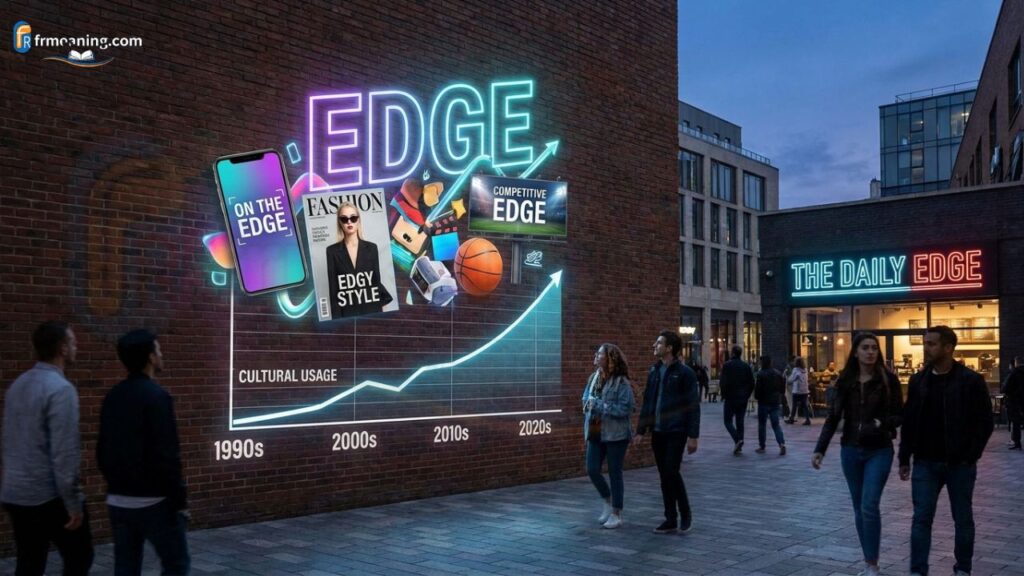
The rise of edge culture wasn’t random — it grew out of specific music and fashion movements before social media ever existed. Understanding this origin actually fills a gap most competing articles completely skip over (they just say it “gained traction online” without explaining where it actually started).
Where “Edge” Actually Came From (The History Nobody Explains)
Here’s the thing most articles won’t tell you: the term “edge” has roots that go back way further than TikTok. In the 1980s, the hardcore punk scene coined the term “straight edge” to describe musicians and fans who avoided drugs, alcohol, and casual relationships as a form of rebellion against mainstream punk excess. That subculture literally used “edge” as an identity marker — a way of saying “I live differently, on purpose.”
From there, the word slowly detached from its strict straight-edge origins and started getting used more loosely to describe anyone with a bold, non-conformist attitude. Emo and goth subcultures in the 2000s picked it up next, applying it to fashion and aesthetic more than lifestyle choices. Then Tumblr in the early 2010s ran with it, turning “edgy” into shorthand for dark, moody, or provocative content. By the time TikTok and Instagram came around, edge had already been through three or four cultural makeovers — the apps just sped up how fast the meaning spread and mutated.
So when someone says something has edge today, they’re really drawing (whether they know it or not) from decades of subcultural history, not just a random internet trend.
Punk/goth/emo subcultures → originated → the dark aesthetic that defines modern edge.
Edge Me Meaning Slang (Wait, Is This Different?)
Okay, quick but important clarification here because this phrase confuses a lot of people. “Edge me” is NOT the same as having “edge” as a personality trait — it’s actually internet slang tied to a completely different, more explicit context involving arousal and self-restraint, often used jokingly or literally in certain online spaces. It has nothing to do with fashion, humor, or personality edge that we’ve been discussing.
Similarly, “don’t edge me” is a phrase used in that same context — basically telling someone to stop teasing or holding back on purpose. If you saw this phrase and got confused thinking it related to “having edge” as a personality trait, that’s a totally different meaning, and it’s worth knowing the distinction so you don’t mix contexts in conversation.
Edge Meaning Slang: Gen Z vs Gen Alpha
Both generations use edge, but the flavor is a little different between them, and honestly this distinction deserves way more attention than most articles give it.
| Aspect | Gen Z Usage | Gen Alpha Usage |
|---|---|---|
| Primary meaning | Bold personality, alt fashion, emotional depth | Rebellious or “cool” standout behavior |
| Common platforms | TikTok, Instagram, Tumblr revival | TikTok, Roblox chats, YouTube shorts |
| Tone | Often sincere, tied to identity | Often used more casually/jokingly |
| Associated aesthetics | Emo, goth, alt-fashion, dark academia | Gaming culture, meme humor, chaotic energy |
Edge meaning slang for Gen Z tends to lean into genuine self-expression — its tied closely to identity, mental health openness, and alternative fashion communities. Gen Z grew up watching Tumblr-era emo culture resurface, so their version of “edge” often carries emotional weight.
Edge meaning slang Gen Alpha, on the other hand, tends to be a bit more playful and meme-driven. Younger users often apply “edge” more loosely — calling a Roblox skin “edgy” or a joke “having edge” without it necessarily connecting to deeper identity stuff. It’s less about subculture belonging and more about instant, in-the-moment coolness.
Edge Meaning in Internet Culture
Edge meaning in internet spaces generally refers to content, humor, or aesthetics that intentionally push against the mainstream or “normie” grain. Something with internet edge often feels a little chaotic, unexpected, or boundary-testing — but in a way that’s meant to entertain rather than genuinely offend (though, let’s be real, it doesn’t always land that way).
Memes with edge usually rely on:
- Dark humor delivered with a straight face
- Unexpected juxtapositions (cute + creepy, wholesome + chaotic)
- Irony that makes fun of trying too hard to be “deep”
- Visual aesthetics that clash with typical polished internet content
Internet edge → thrives on → irony, sarcasm, and intentional unpredictability.
Edge Meaning in Person (IRL, Not Just Online)
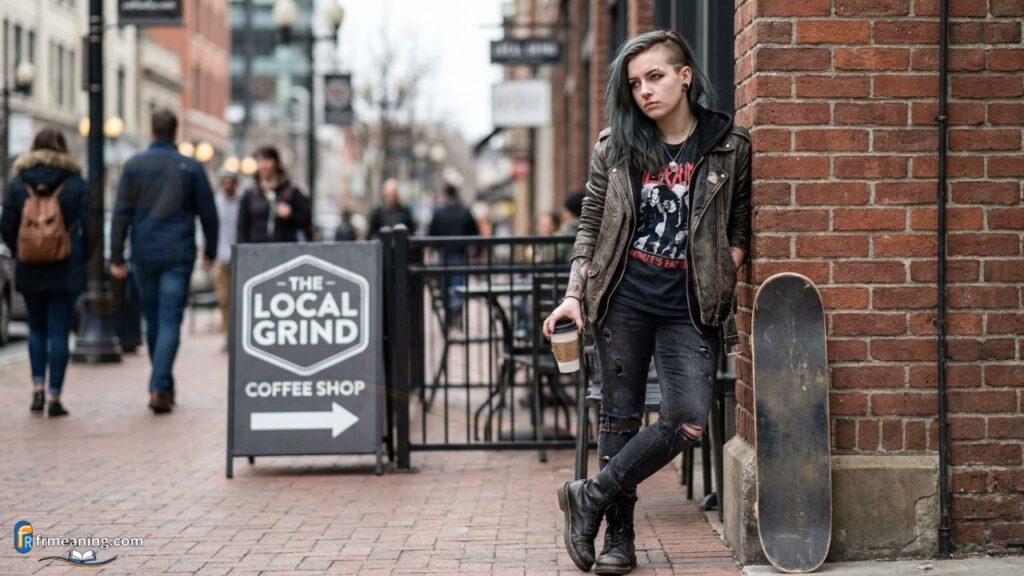
When someone has edge in person, its noticeably different from how they present online. In real life, edge often comes through in body language, tone of voice, or how someone handles social situations — a certain calmness mixed with unpredictability that makes them feel a little mysterious.
People with in-person edge:
- Speak with confidence but don’t over-explain themselves
- Dress in ways that feel intentional, not attention-seeking
- Have a dry or dark sense of humor that surprises people
- Carry a mysterious vibe without trying too hard
The key difference between online edge and in-person edge is authenticity — online, edge can be curated and edited. In person, its much harder to fake, which is why people who have “real edge” IRL tend to stand out more genuinely.
Types of “Edge” in Slang
There isn’t just one flavor of edge — it actually breaks down into a few distinct categories depending on where it shows up.
Personality edge describes someone whose presence feels intense and a little unpredictable. They’ve got that bold personality and risk-taking personality combo that draws attention without them even trying that hard.
Style edge lives in the fashion world — alternative fashion, dark clothing, leather, bold accessories, all of it. This is probably the most visible type of edge because you literally see it before anything else.
Artistic edge shows up in music, writing, and visual art. It’s that willingness to take creative risks, explore dark aesthetics, and make something that doesn’t play it safe.
Humor edge is all about jokes that walk the line — sarcastic, a bit dark, occasionally shocking, but clever enough that people laugh instead of getting offended.
Emotional edge, meanwhile, is more internal — it’s raw, authentic feeling that comes through in how someone expresses themselves, whether that’s through art, conversation, or just how they carry their emotions.
Positive vs Negative: Two Sides of “Edge”
Not all edge is created equal, and this distinction matters a lot.
Positive edge feels effortless. It comes from genuine authenticity, and people with this kind of edge aren’t trying to prove anything — their creative edge and unique style just naturally draw people in.
Negative edge, on the other hand, feels forced. This is the “trying too hard” version — someone copying trends, exaggerating a rebellious attitude, or telling boundary-pushing jokes that just come across as awkward instead of clever.
Authenticity → differentiates → real edge from fake, try-hard edge.
How “Edge” Differs from “Edgy”
Quick but important distinction: edge is something someone naturally has, while edgy usually describes an active attempt to seem bold or unconventional. You can have edge without ever trying to be edgy — and honestly, that’s usually when it comes across the best.
| Term | Meaning | Common Tone |
|---|---|---|
| Edge | A natural, inherent quality or vibe | Positive / Neutral |
| Edgy | Actively trying to push boundaries | Mixed (can be positive or forced) |
| Having Edge | Confident intensity, effortless | Positive |
| Being Edgy | Sometimes exaggerated or performative | Mixed |
Edge in Fashion, Music, and Humor
Fashion is probably where edge in fashion shows up most visibly — leather jackets, bold makeup, statement boots, visible tattoos, all of it screams individuality and a non-conformist attitude.
In music, genres like punk, grunge, indie, and alternative rock have basically built their whole identity around edge. Artists lean into emotional intensity and boundary-pushing themes, and fans pick up on that energy, translating it into their own style and attitude.
Music genres like punk and alternative rock → reinforce → creative edge and emotional intensity in fans.
Humor with edge relies on sarcasm and dark comedy that surprises people without crossing into genuinely offensive territory. When it’s done well, it feels clever. Done badly, it just feels like someone trying way too hard to shock people.
Psychological Roots of “Edge” (Why We’re Drawn to It)
Honestly, there’s a real reason people are so obsessed with edge — it’s not just a trend, it taps into something deeper about how humans perceive confidence and individuality. People with bold personality traits or a mysterious vibe tend to stick in our memory way longer than people who blend in. That’s just how attention works, psychologically speaking. We notice contrast, and edge is basically built on contrast — it stands out against whatever’s considered “normal” at the time.
Youth culture slang in general tends to reinforce this pattern too. Teenagers and young adults are actively figuring out who they are, and words like edge give them a quick, easy label to describe the identity they’re trying to build. It’s kind of like a shortcut — instead of explaining “I’m confident, a little rebellious, and I don’t care what people think,” you can just say “I’ve got edge” and most people get the vibe instantly.
There’s also a social element here worth mentioning. Having edge often signals risk-taking personality traits, and in group settings, risk-takers are frequently seen as leaders or trendsetters, even if that’s not always fair or accurate. So chasing edge, whether consciously or not, is sometimes just chasing social status in disguise.
Real Edge vs Fake Edge: How to Tell the Difference
This is honestly one of the more interesting parts of edge culture, and its something people argue about constantly online.
Real edge tends to feel calm and effortless. Someone with authentic edge isn’t performing for an audience — their confidence, style, or humor just naturally comes out that way because that’s genuinely who they are. There’s no visible effort behind it, which paradoxically makes it way more noticeable.
Fake edge, on the other hand, usually has a certain “trying too hard” energy attached to it. This might look like:
- Copying someone else’s aesthetic without adding personal flair
- Exaggerating dark humor just to get a reaction, not because it’s actually funny
- Wearing alternative fashion pieces without understanding or caring about the culture behind them
- Acting rebellious specifically because it gets attention, not because it reflects genuine beliefs
Most people can spot the difference pretty quickly, even if they can’t always explain why something feels off. It usually comes down to consistency — real edge shows up the same way whether someone’s being watched or not, while fake edge tends to disappear the second the spotlight’s gone.
Does Edge Mean Someone Is Dark or Depressed?
Not necessarily, and this is honestly a pretty common misconception worth clearing up. While edge does sometimes get associated with dark aesthetic or emo subculture styles, that doesn’t automatically mean the person is going through something emotionally difficult. A lot of the time, edge in personality just reflects confidence, creativity, or a preference for intense, authentic self-expression — nothing more.
That said, there can be overlap sometimes. Emotional edge, as we mentioned earlier, does involve raw and authentic feelings, and for some people that authenticity includes talking openly about mental health struggles. But it’s important not to assume every “edgy” person is secretly sad or troubled — plenty of people with strong edge are just naturally bold, expressive, and comfortable standing apart from the crowd.
Why Edge Slang Isn’t Going Anywhere
If anything, edge meaning slang seems to be getting more embedded into everyday internet vocabulary, not less. As social media keeps rewarding content that stands out from the algorithm’s usual feed of polished, safe posts, words like edge give creators and everyday users a shorthand for describing exactly that kind of standout energy. Whether it’s Gen Z reviving Tumblr-era emo aesthetics or Gen Alpha applying it to gaming and meme culture, the core idea stays the same: edge is about being memorable, intentional, and just a little bit different from everyone else.
FAQs
What does edge mean slang?
It describes a bold, intense, or unconventional quality in personality, style, humor, or creative expression that makes someone stand out.
What is edge slang on TikTok?
It refers to bold, non-mainstream fashion, humor, or aesthetic choices shown in videos, often used in captions or comments.
What does “don’t edge me” mean?
It’s slang from a different context, meaning “stop teasing or holding back,” unrelated to personality-based edge.
What’s the difference between edges slang and edge slang?
“Edges” usually refers to hairline styling in beauty slang, while “edge” describes personality, fashion, or attitude.
What does edge mean in Gen Alpha slang?
It reflects playful, meme-driven coolness or rebellious standout behavior, often used more casually than Gen Z’s version.
Is being edgy always a good thing?
Not always — positive edge feels authentic, while negative or forced edginess often comes across as try-hard or awkward.
What does it mean if someone is “on edge”?
This is a separate phrase meaning someone is tense, anxious, or emotionally sensitive, not related to slang edge.