

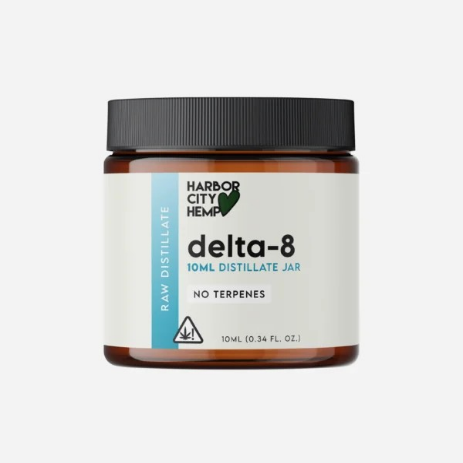
Two bottles of cannabinoid distillate could look almost identical. Both may be thick and amber in color, and both may bear a label claiming high purity. But those details don’t tell a buyer all that matters.
With delta 8 distillate, the bigger questions are about how the material was made, what’s left over after processing, and whether the lab results match what’s on the label.
These are not just technical details for manufacturers to worry about. Anyone researching this material, especially for commercial purposes, needs to understand what the available test results actually say.
It Starts With the Raw Material
Delta-8 THC occurs naturally in cannabis plants, but generally in small quantities. Commercial products are often made by converting CBD into delta-8 THC through a chemical process.
That extra step makes production quality particularly important.
The starting material , the chemicals used during processing and the purification methods can all affect the final composition . If the process is not well controlled it can leave behind unwanted compounds or generate other cannabinoids and reaction byproducts.
That is one reason why a buyer should not rely on the advertized potency of a product alone. A high percentage on a label does not necessarily mean that the material has been heavily tested for impurities.
When looking into Delta 8 thc distillate, it is helpful to find information about the finished batch, and not rely on general descriptions of how the product is supposed to be manufactured.
What Does Purity Really Tell You?
Purity sounds like a simple measurement but the word can mean different things depending on the test being discussed.
A laboratory may measure the concentration of delta-8 THC and other cannabinoids. That result tells the reader something about the sample’s chemical composition, but it doesn’t necessarily establish whether residual solvents, heavy metals, pesticides, or other contaminants are absent.
In other words, one good-looking number cannot answer every quality question.
A more useful laboratory report might contain:
● Cannabinoid profile: The measured amounts of delta-8 THC and other detected cannabinoids.
● Residual solvent testing: Results for any solvents that may remain from the manufacturing process.
● Heavy metal screening: Information about relevant potentially harmful metals.
● Pesticide testing: Results for pesticides included in the testing panel.
● Additional contaminant checks: Other tests appropriate to the material and its intended market.
Not all reports cover every possible substance. Buyers should confirm what tests were actually performed and whether the results meet applicable requirements.
A Laboratory Report Is Worth Reading Properly
A Certificate of Analysis, or COA, is one of the most useful documents available when assessing a cannabinoid product. It records the results of testing performed on a particular sample.
Still, downloading a report isn’t the same as verifying a product.
Start by checking the product name, batch number, and testing date. If the report cannot be connected clearly to the material being offered, its usefulness is limited.
Next, look at the laboratory and the methods used. Independent testing by a suitably qualified laboratory provides more meaningful evidence than an unsupported statement from a seller.
Pay attention to the actual results, too. A report that shows cannabinoid potency but doesn’t include relevant contaminant testing leaves unanswered questions.
A COA also represents the sample that was tested, not necessarily every container in a shipment. Traceability and representative sampling therefore matter.
Buying in Larger Quantities Changes the Questions
Someone comparing small quantities may mainly want to understand the product’s composition. A business considering Bulk delta 8 distillate has additional reasons to examine the paperwork carefully.
For larger purchases, consistency between batches becomes important. A previous batch may have met the buyer’s specifications, but that doesn’t establish that a later batch will have identical results.
Before making a purchasing decision, buyers can ask the supplier:
● Is a current COA available for the specific batch?
● Are batch numbers recorded consistently?
● Which contaminant tests are included?
● Can the supplier explain differences between batches?
● Are the material specifications and applicable legal requirements clearly documented?
These questions are practical, not overly technical. They help establish whether the supplier can support its claims with information about the actual product.
The same approach applies when evaluating Bulk d8 distillate. Price and volume may influence a commercial decision, but neither tells a buyer whether the material meets the required quality specifications.
Storage Is Easy to Overlook
Production and laboratory testing receive much of the attention, while storage often gets mentioned only briefly.
Yet handling matters after manufacturing, too. Unsuitable temperatures, exposure to light or air, and poor container conditions may affect a material’s condition over time.
Buyers should follow the supplier’s documented storage instructions and keep containers properly sealed and labelled. Material that has been stored incorrectly should not automatically be assumed to remain within its original specifications.
Clear records can also help businesses identify which batch they received and whether the associated test documentation is available.
These measures don’t make a product risk-free, but they support better handling and traceability.
Safety and Legal Requirements Still Apply
Laboratory testing can provide information about composition and contaminants, but it cannot establish that a product is safe for every use.
Delta-8 THC is psychoactive. The U.S. Food and Drug Administration has warned about products containing delta-8 THC, including concerns about manufacturing methods, contamination, and adverse reactions. Buyers should not treat a hemp-derived label as proof of safety.
The legal position also varies by jurisdiction. Anyone considering purchasing or distributing D8 distillate should check the laws that apply to the product, location, and intended activity before proceeding.
Final Thoughts
When comparing cannabinoid distillates, appearance and advertised potency tell only part of the story. Production records, batch-specific testing, and clear documentation provide a more useful basis for evaluating quality.
For people researching delta 8 distillate through Harbor City Hemp, the sensible approach is to examine the available product information carefully and ask questions wherever important details are missing.
A reliable purchasing decision starts with evidence, not assumptions. The more clearly a supplier can document what a batch contains, the easier it becomes to assess whether that material meets the relevant requirements.
