
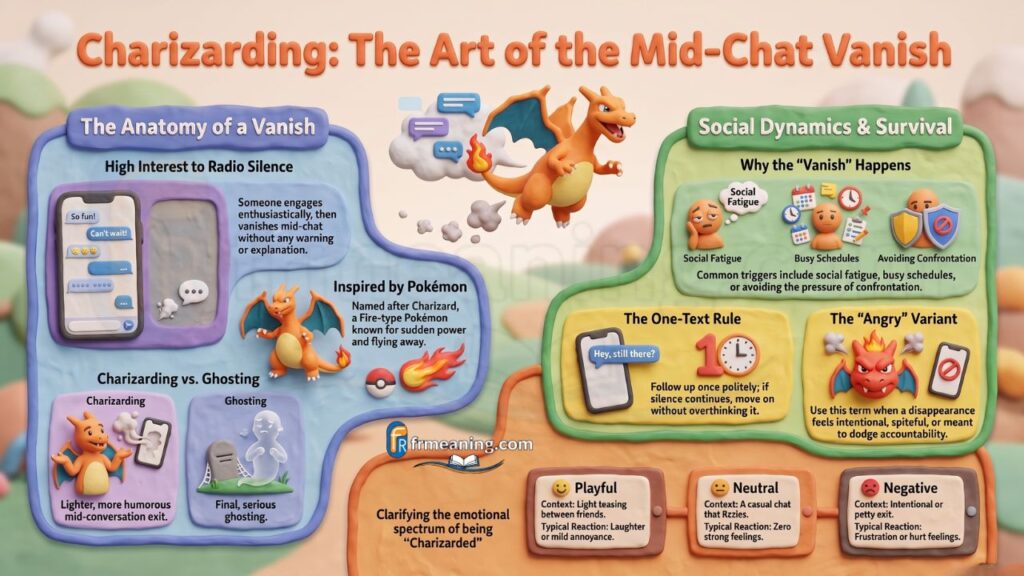

If your phone has ever gone from “we’re vibing” to complete radio silence in like two hours flat, you’ve probably lived through charizarding even before you knew the word existed.
This is one of those internet terms that sounds ridiculous at first glance but somehow describes a very real, very annoying situation almost everyone has been on either side of.
So what does charizarding mean, where’d it come from, and why is it suddenly everywhere on your For You page? Let’s get into it.
What Is Charizarding? A Quick Definition
Charizarding is slang for when someone suddenly disappears from a conversation, stops replying, or ghosts you right after showing genuine interest or excitement. It’s usually used to describe texting, dating app chats, or casual online conversations where a person goes from “super into it” to “completely gone” with zero warning.
Basically, if someone’s typing away, sending double texts, hearting your memes, and then just… vanishes without explanation, that’s charizarding. The term carries a playful, slightly exaggerated tone rather than a dead-serious one, which is honestly what makes it so fun to use in the first place.
Charizarding Meaning In Simple Terms
To break it down even further, charizarding meaning covers a few core behaviors that keep showing up in real conversations:
- Someone engages enthusiastically, then goes quiet out of nowhere
- A person disappears mid-chat without any real reason
- Interest fades suddenly and unexpectedly
- Messages get left on read despite earlier excitement
It’s a lot like ghosting, but with a bit more drama and humor baked into it, kind of like the person didn’t just leave, they made a whole exit scene out of it.
Where Did the Term Charizarding Come From?
You’re probably wondering why a Pokémon is involved in all this, and honestly, fair question. Charizard → inspired → charizarding, and once you understand the connection it actually makes a lot of sense.
Charizard is one of the most iconic fire-type Pokémon, known for its dramatic entrances, sudden bursts of power, and its tendency to literally fly away without much notice. Somewhere along the line, internet users started comparing that “here one second, gone the next” energy to people who vanish from conversations the exact same way.
It’s not officially in any dictionary, and honestly it probably won’t be for a while, but that’s kinda the charm of internet slang, it grows organically instead of being handed down by some official source.
Charizarding Meaning TikTok: How the Term Blew Up
A big chunk of the credit for this term going viral goes straight to TikTok. Charizarding meaning TikTok content usually shows up as short skits, reaction videos, or relatable memes where creators act out the exact moment someone “charizards” them mid-conversation. These clips spread fast because, let’s be real, nearly everyone’s experienced this exact scenario at least once.
Social media → popularized → charizarding, and it spread specifically through:
- Meme pages sharing relatable texting fails
- Gen Z and millennial creators using it in skits and captions
- Dating content creators applying it to app-based conversations
- Comment sections adopting it as shorthand for flaky behavior
Once a term starts trending in comment sections, it’s basically only a matter of weeks before it becomes part of everyday texting vocabulary.
Charizarding Pronunciation
Not sure how to actually say it out loud? The charizarding pronunciation is pretty straightforward: chair-uh-ZARD-ing. Just say “Charizard” the way you would with the Pokémon, then tack on “-ing” at the end, same as you would with words like “ghosting” or “texting.” No hidden tricks here, it reads exactly how it looks.
Charizarding Example: What It Looks Like In Real Conversations
Seeing charizarding in action honestly explains it better than any definition could. Here’s a charizarding example table showing a few common situations people run into.
| Situation | Example Message | What Happened | Tone |
|---|---|---|---|
| Dating chat | “I had a great time, let’s meet again!” | No reply afterward | Confusing |
| Friendly chat | “I’ll send you the details in a bit” | Never follows up | Mildly annoying |
| Work context | “I’ll review this today” | Goes silent | Unprofessional |
| Casual texting | “Haha that’s funny 😂” | Stops replying suddenly | Neutral |
You’ll notice charizarding doesn’t only happen in romantic situations, it shows up with friends, coworkers, even acquaintances. Basically anywhere someone can type a message and then choose not to send another one ever again.
People Charizarding: Common Scenarios
When people talk about people charizarding them, it’s usually one of these setups:
- Someone replies fast at first, then vanishes for days (or forever)
- A person shows strong interest early on, then just stops responding altogether
- A conversation ends abruptly with zero closure, no “gotta go” or anything
None of this is exactly new behavior, honestly, but giving it a catchy name made it way easier to talk about and, weirdly, kinda funnier too.
Angry Charizarding Meaning: When the Tone Shifts
Not every use of the term is lighthearted. There’s also what people call the angry charizarding meaning, which describes a version where the disappearance feels more intentional or spiteful rather than just careless or forgetful. Instead of someone simply getting busy or forgetting to text back, angry charizarding implies the person left on purpose, maybe even to avoid an argument or dodge accountability altogether.
This angrier version usually pops up in captions like: “he angry charizarded me after I asked a simple question” — basically pointing out that the disappearance felt deliberate and a little petty, not accidental.
Tone and Emotional Impact of Charizarding
Charizarding can hit differently depending on the situation, and the emotional weight behind it really does vary quite a bit from person to person.
| Tone Type | Description | Example |
|---|---|---|
| Playful | Light teasing between friends | “Stop charizarding me 😂” |
| Neutral | Simple observation, no strong feelings | “He charizarded after that message” |
| Negative | Frustrated or genuinely upset | “That was rude, honestly” |
Confusion, annoyance, and disappointment → are the most common → emotional reactions to charizarding. Someone left on read after a great date might feel confused (“did I say something wrong?”), while someone who’s been charizarded repeatedly by the same person might feel more genuinely annoyed or even hurt by it.
Charizarding vs Ghosting vs Breadcrumbing: What’s the Difference?
This is probably the most common mix-up, so let’s clear it up. Charizarding → is a lighter, more casual variant of → ghosting, but the two aren’t exactly identical twins.
- Ghosting: Completely cutting off contact, usually final and more serious in tone
- Ignoring: Not replying on purpose, but without much of a playful spin
- Breadcrumbing: Giving just enough attention to keep someone interested, an ongoing pattern rather than one disappearance
- Charizarding: A sudden mid-conversation vanishing act, more humorous and less “final” sounding than ghosting
Basically, ghosting is like closing the door and locking it. Charizarding is more like sprinting out mid-sentence, dramatic exit included, but leaving the door cracked open just enough that you’re not totally sure if they’re coming back.
Why Charizarding Happens
Understanding the “why” behind it genuinely helps take some of the sting out, honestly. Most of the time it’s less personal than it feels in the moment.
Common reasons people charizard conversations include:
- Loss of interest that fades faster than expected
- Busy schedules that make replying feel like a chore
- Social fatigue, especially after juggling too many chats at once
- Avoiding confrontation rather than saying something honest
- Simply forgetting to reply and then it becoming awkward to respond late
Sometimes people genuinely mean to text back and just… don’t, and then too much time passes and replying feels weirder the longer they wait. It’s not always malicious, sometimes it’s just bad communication habits piling up.
Is Charizarding the Same as Being Rude?
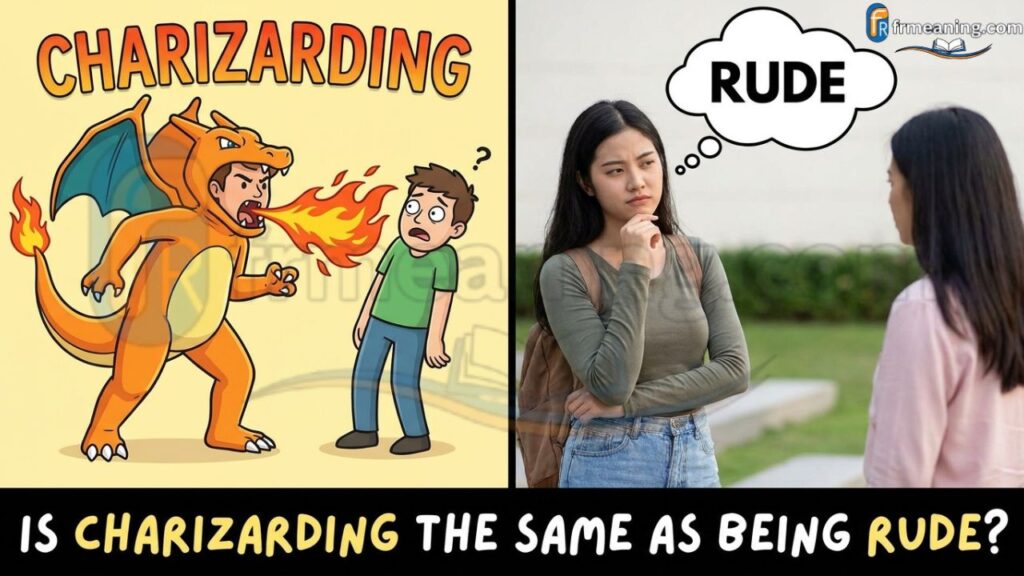
Not always, no. Whether charizarding feels rude or not really depends on context.
It depends on:
- The type of relationship between the two people
- How often this kind of disappearing act happens
- What expectations were set beforehand in the conversation
A one-off charizarding moment during a busy week probably isn’t worth stressing over. But if it becomes a repeated pattern with the same person, it can start to feel genuinely disrespectful, and that’s a fair thing to feel.
The Psychology Behind Why People Disappear (A Gap Most Articles Miss)
Here’s something most explainers skip over entirely: the actual psychology behind why disappearing feels so much easier online than it would face-to-face. Digital communication → reduces accountability → avoidant behavior like charizarding, mainly because there’s no immediate social pressure keeping someone in the conversation.
In person, walking away mid-sentence feels awkward and rude in an obvious, immediate way. Online, you can just… not open the app. There’s a psychological concept sometimes called the “online disinhibition effect,” where people act less considerate behind a screen than they would in real life, simply because the consequences feel distant and abstract. Add in the fact that a lot of people genuinely struggle with confrontation, and disappearing becomes the path of least resistance rather than an intentional cruelty.
This ties into attachment styles too. People with more avoidant tendencies in relationships often default to withdrawal instead of direct communication when things feel uncomfortable, whether that’s romantic pressure, an awkward question, or just plain disinterest. Charizarding, in that sense, isn’t really a “new” behavior at all, it’s just a very old avoidance habit wearing a fresh, meme-friendly name.
Where Charizarding Fits In the Timeline of Internet Slang
Charizarding didn’t appear out of nowhere, it fits into a much longer tradition of coining playful terms for flaky communication. Older generations had phrases like “pulling a Houdini” or “giving someone the cold shoulder” long before texting existed. What’s changed isn’t really the behavior, it’s the speed at which new slang spreads now.
Terms like charizarding tend to follow a pretty predictable path: a creator or meme page uses it casually, it resonates because it’s relatable, it spreads through comment sections and duets, and within a few weeks it’s part of everyday vocabulary for a specific age group, mostly Gen Z and younger millennials right now. Whether it sticks around for years or fades out in a season is honestly hard to predict, slang is unpredictable like that.
The “Charizarding Meaning Video Girl” Trend
If you searched “charizarding meaning video girl,” you’ve probably stumbled across one of the viral clips where a creator, often a girl reacting to a chat that went cold, acts out the whole scenario in real time. These videos usually follow a pattern: excited texting, a sudden gap, then a dramatic “and then she/he charizarded me” reveal at the end. It’s less about one single viral video and more about a format that a bunch of creators borrowed and remixed, which honestly is a huge part of why the term spread as fast as it did.
Charizarding Images and Visual Memes
Alongside the videos, charizarding images have become their own little corner of the trend. Most of them use screenshots of the Pokémon Charizard mid-flight, paired with captions like “me leaving the group chat” or “him after one bad text.” Some are just edited chat bubbles showing the classic “typing… then nothing” pattern. These images spread fast on meme pages precisely because they’re instantly relatable without needing much explanation.
You might also see the word spelled a little differently in searches, like charzarding, which is basically just a common typo or shorthand version of the same term. Search engines and social platforms usually treat it the same way, so don’t overthink the spelling too much, everyone gets the point either way.
When (and When Not) to Use “Charizarding”
Knowing where this word actually fits is kind of important if you don’t want to sound out of place.
Good places to use it:
- Casual chats with friends
- Social media captions or comment replies
- Lighthearted complaints about someone’s texting habits
Places to avoid it:
- Professional emails
- Formal workplace communication
- Serious, emotionally heavy relationship conversations
Professional Alternatives to “Charizarding”
If you need to describe the same behavior without sounding, well, like you’re quoting a meme in a work email, try these instead:
- “They stopped responding unexpectedly”
- “Communication dropped off suddenly”
- “They didn’t follow up as planned”
- “The conversation ended without closure”
How to Respond When Someone Charizards You
If you’ve been on the receiving end, here’s the honestly most sane approach:
- Follow up once, politely, no need to send five texts in a row
- If there’s still no response, it’s okay to just move on
- Try not to overthink what you might’ve “done wrong”
- Focus your energy on people who actually communicate clearly
At the end of the day, someone else’s disappearing act says more about their communication habits than it does about you.
FAQs About Charizarding
What does charizarding mean in texting?
It means someone suddenly stops replying after engaging enthusiastically, often without any explanation or warning at all.
Is charizarding the same as ghosting?
Not exactly, ghosting is usually more permanent and serious, while charizarding leans more casual and humorous in tone.
Why do people charizard conversations?
Common reasons include losing interest, busy schedules, social fatigue, forgetting to reply, or avoiding uncomfortable confrontation.
What is the correct charizarding pronunciation?
It’s pronounced “chair-uh-ZARD-ing,” basically Charizard plus “-ing,” same rhythm as ghosting or texting.
Where did charizarding come from?
It’s inspired by the Pokémon Charizard, known for dramatic, sudden exits, adapted into internet slang for vanishing conversations.
Can charizarding happen in friendships too?
Yes, definitely, it isn’t limited to dating, it can happen with friends, coworkers, or basically any casual chat.
How should I react if someone charizards me?
Follow up once politely, then move on if there’s silence, don’t waste energy overthinking someone else’s disappearing act.
Final Thoughts
Charizarding is basically a funnier, slightly more dramatic way of naming a very familiar digital-age experience, someone showing up excited and then just… not showing up again.
Whether it’s happening in a dating app chat, a group text, or a casual friendship, understanding the term (and the psychology behind it) can make those confusing silences feel a little less personal. And hey, if nothing else, at least now you’ve got a fun word for it next time someone pulls a Charizard on you mid-conversation.