

So you scrolled through someone’s bio, saw the letters MDNI, and just kinda stopped, right? Yeah, that happens to basically everyone the first time. Whether you spotted it on X, Tumblr, Bluesky, or TikTok, the confusion is real and honestly, you’re not the only one googling “what does MDNI mean” at 2am.
Understanding the MDNI meaning matters more now than ever, because this little abbreviation shows up in thousands of bios, pinned posts, and community rules across the internet. This guide breaks it down in plain, no-nonsense language, so by the end you’ll actually get it.
Quick Answer: What Is MDNI Meaning?
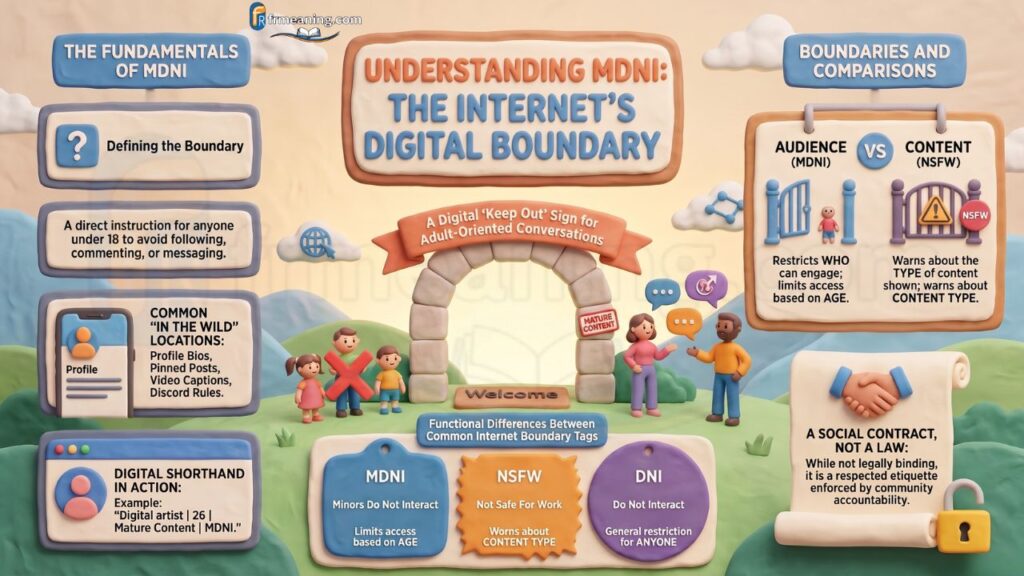
MDNI stands for “Minors Do Not Interact.” It’s a boundary line that account owners — usually adults — place in their bio to tell anyone under 18 to keep their distance. It’s not a secret code or an inside joke; it’s basically a digital “keep out” sign for younger users, most commonly used by creators who post mature or adult-themed content.
Simple as that. But there’s a lot more nuance to unpack, so let’s actually dig into it properly.
What Does MDNI Mean In Different Contexts?
MDNI Meaning In English (The Literal Breakdown)
In plain English, MDNI meaning breaks down word by word: Minors (anyone under 18), Do Not (a direct instruction), Interact (engage in any way — following, commenting, messaging). Put together, it’s a fairly blunt request: grown-ups only, please.
Unlike some internet slang that’s just for fun, this one carries actual intent behind it. The person writing it wants to reduce interactions from younger audiences, plain and simple.
MDNI Meaning In Chat
You won’t really see MDNI dropped casually mid-conversation the way people throw around “lol” or “brb.” Instead it shows up when someone’s explaining their boundaries or sharing a profile link. For example:
Alex: “Before you follow my art page, check my bio. MDNI.”
That’s basically Alex saying — hey, I only want adults following this thing. Another one:
Taylor: “This Discord’s for adults only, MDNI applies here too.”
See the pattern? It’s less about speeding up a chat and more about setting a rule before anyone gets too deep into a conversation.
MDNI Meaning TikTok
TikTok’s actually become one of the bigger hubs for this term lately. Creators discussing mature humor, adult topics, or heavier themes will slap “MDNI” right into their bio or even in video captions. Something like “Adults only convos • MDNI” is super common now. Because TikTok’s algorithm pulls in such a massive, mixed-age audience, creators lean on MDNI as a quick disclaimer before minors accidentally stumble into content that isn’t meant for them.
MDNI Twitter (X) Usage
Twitter — sorry, X now — is honestly where MDNI probably got its biggest push into mainstream slang. Fandom spaces, fanfic writers, digital artists, and roleplay accounts use it constantly. A typical bio might read: “22 • writer • mature content • MDNI.” On X specifically, the term often sits right next to other tags like NSFW or 18+, creating a small cluster of warnings that together paint a clear picture of who the account is (and isn’t) for.
MDNI Location: Where You’ll Actually Spot It
Knowing where MDNI usually shows up helps you recognize it faster in the wild. Here’s a rundown:
- Profile bios — the number one spot, hands down
- Pinned posts — often paired with a longer explanation
- Video captions — especially on TikTok and Instagram Reels
- Community/Discord server rules — as a membership condition
- Comment replies — when someone’s reminding a follower of the rule
The mdni location basically follows wherever a creator introduces themselves — it’s meant to be seen before interaction happens, not after.
Is MDNI A Personality Trait? (MDNI Personality Explained)
Okay real talk — a lot of people search “mdni personality” thinking it describes a type of person, like an MBTI label or a personality quiz result. It doesn’t. MDNI isn’t describing character traits at all; it’s a boundary tag, not a personality category.
That said, there IS a loose personality-adjacent vibe some users associate with accounts that use it often people who are pretty direct about consent, boundaries, and comfort levels online. So while it’s not literally a “personality type,” creators who use MDNI tend to value clear communication and personal space, which — fair enough — kind of says something about how they operate socially.
MDNI Meaning LGBT Spaces
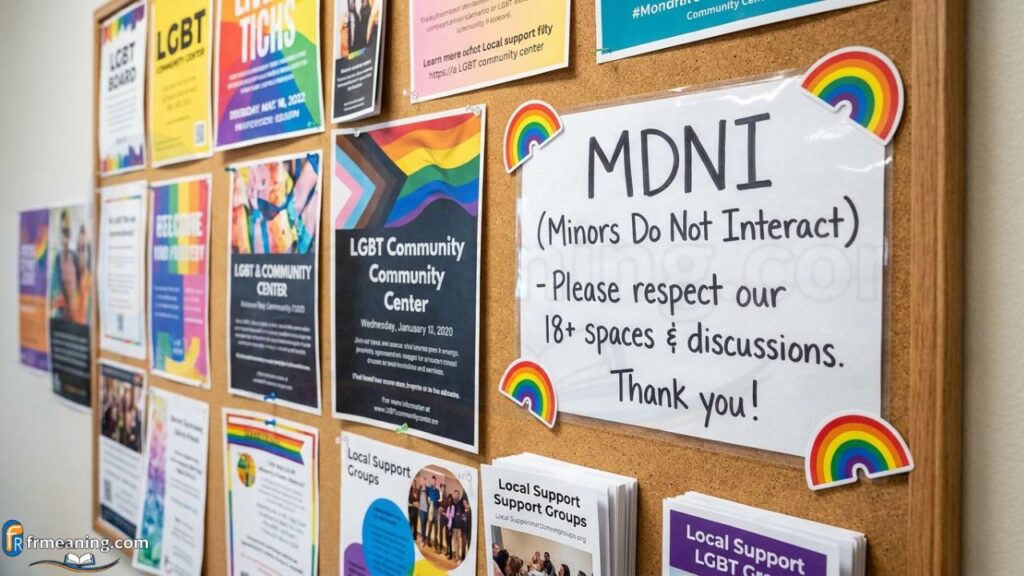
Within LGBT communities online, especially on platforms like Tumblr and Bluesky, MDNI shows up a ton — often alongside identity labels in a bio. This isn’t because the term itself has anything to do with sexuality or gender; it’s simply that these communities historically discuss mature or personal topics (relationships, identity exploration, adult humor) more openly, so the boundary marker becomes a practical necessity.
LGBT creators use MDNI the exact same way straight creators do — to separate adult conversations from a younger audience that might stumble in.
MDNI vs NSFW: What’s The Real Difference?
This confuses people constantly, so let’s clear it up. NSFW meaning stands for “Not Safe For Work,” and it’s a content descriptor — it tells you the material itself might be explicit, graphic, or inappropriate for a work environment. MDNI, on the other hand, isn’t describing content at all. It’s describing who’s allowed to engage.
| Term | What It Means | What It Restricts |
|---|---|---|
| MDNI | Minors Do Not Interact | Restricts who can engage (age-based) |
| NSFW | Not Safe For Work | Warns about content type (explicit material) |
| SFW | Safe For Work | Confirms content is generally appropriate |
| DNI | Do Not Interact | Broader — applies to anyone unwanted, not just minors |
| CW | Content Warning | Flags sensitive topics, doesn’t restrict audience |
So basically: NSFW warns you about the content, MDNI warns you about who shouldn’t be there at all. Two totally different jobs.
Semantic Relationship: How These Terms Connect
To make this crystal clear — MDNI is a subset of the broader “DNI” (Do Not Interact) family. DNI can apply to literally anyone a creator doesn’t want around (harassers, specific fandoms, whatever), while MDNI narrows that down specifically to age.
Meanwhile, adult content creators frequently pair MDNI with NSFW tags because the two work together — one restricts audience, the other warns about material. That combo creates a fuller boundary than either tag alone.
Is MDNI Legally Binding? (The Gap Nobody Explains Properly)
Here’s something most articles online gloss right over — does MDNI actually mean anything legally, or is it just words on a screen?
Short answer: MDNI is not legally enforceable on its own. It’s a stated preference, not a law. Posting “MDNI” in your bio doesn’t create a binding contract, and platforms generally won’t take action just because someone violated it — unless the underlying content itself breaks platform policy (like actual child safety violations, which platforms absolutely do enforce hard).
That said, it’s not completely toothless either:
- Platform Terms of Service already require most social platforms to restrict minors from certain adult content categories — MDNI just reinforces what the platform’s own rules already say.
- Reporting mechanisms exist on most apps, so if a minor is clearly and knowingly interacting despite an MDNI notice, creators can sometimes report or block that account without much hassle.
- Community accountability plays a bigger role than legal weight — in tight-knit spaces (fandom, art communities, roleplay groups), ignoring someone’s MDNI tag can get you socially called out or blocked from group spaces entirely.
So while MDNI won’t hold up in any actual court, it functions as a social contract — one that most respectful internet users choose to honor because, well, it’s just decent etiquette.
A Quick Look At Where MDNI Came From
Another thing competitor articles barely touch on — the actual origin. MDNI didn’t just appear overnight. It evolved out of older Tumblr-era “DNI” culture, where users would post detailed “Do Not Interact” lists covering everything from political views to fandom preferences.
Over time, as fanfiction writers, artists, and roleplay accounts needed a faster way to flag age-specific boundaries (rather than long DNI lists), MDNI emerged as shorthand. It’s since spread from niche fandom corners into much broader internet slang, showing up now across TikTok, X, and even Discord servers that have nothing to do with fandom at all.
Real Conversation Examples
Here’s a few real-world style examples so you can see how it actually plays out day to day:
- Bio placement: “Digital artist | 26 | MDNI” — neutral, informative, sets the tone immediately.
- Before following: “Please read my bio before following. MDNI.” — polite but firm.
- Pinned post: “This page has mature discussions. MDNI.” — responsible heads-up.
- DM reminder: “Thanks for reaching out, just a reminder — MDNI.” — respectful nudge.
- Comment reply: “My profile clearly says MDNI.” — slightly frustrated, usually after someone ignored the rule.
When You Should NOT Use MDNI
Look, MDNI works great online, but it has zero place in professional settings. Don’t drop it into:
- Job applications or resumes
- Business emails
- LinkedIn profiles
- Client-facing communication
If you genuinely need to state an age requirement professionally, just write it plainly — “intended for adults 18 and older” gets the job done without confusing anyone unfamiliar with internet shorthand.
Expert Tips For Using MDNI Correctly
- Only use it if it’s actually relevant to your content — don’t slap it on randomly.
- Place it somewhere visible, like your bio or a pinned post, before people interact.
- Spell it out once (“Minors Do Not Interact”) if your audience skews older or less online.
- Keep your tone respectful; aggressive phrasing tends to backfire.
- Respect other people’s MDNI notices too — it goes both ways.
FAQs About MDNI Meaning
What does MDNI mean?
MDNI means “Minors Do Not Interact.” It tells anyone under 18 not to follow, comment, or message the account.
What is MDNI used for exactly?
It’s used as a boundary marker, mostly by adult creators, to keep underage users from engaging with mature content.
Is MDNI the same as NSFW?
No. NSFW warns about content type, while MDNI restricts who is allowed to interact based on age.
What’s the difference between MDNI and DNI?
DNI applies to anyone unwanted; MDNI specifically targets minors only, making it more narrow and age-focused.
Is using MDNI legally enforceable?
Not on its own — it’s a stated social preference, though platform policies on minors accessing adult content still apply separately.
Where do people usually put MDNI?
Most commonly in profile bios, pinned posts, video captions, and sometimes Discord server rules.
Why do LGBT and fandom communities use MDNI so much?
These spaces often discuss mature or personal topics openly, so creators use MDNI to separate adult conversations from younger followers.