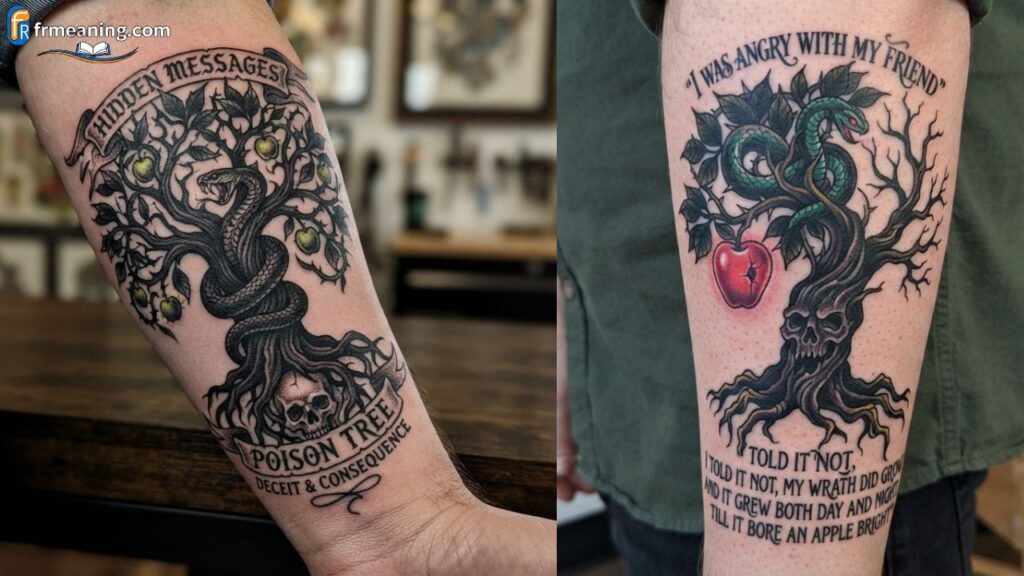

Ever seen a tattoo of a twisted, leafless tree and wondered why someone would choose something so… dark? You’re not alone. The poison tree tattoo meaning goes way deeper than most people assume, and honestly, once you understand what it actually represents, it kinda changes how you look at the design entirely.
This isn’t just gothic body art for shock value it’s a symbol rooted in literature, psychology, and the very human experience of holding feelings inside until they don’t fit anymore.
In this guide we’re gonna break down everything from the poem that started it all, to the psychology behind why people choose this ink, to design ideas, placement, colors, and even the stuff most articles skip over (like healing time and cost, which honestly matter a lot when you’re committing to a piece like this).
What Is a Poison Tree Tattoo?
A poison tree tattoo depicts a tree but not the kind you’d associate with life, renewal, or peace. Think gnarled branches, dark twisted roots, shadowy bark, and sometimes a single gleaming piece of forbidden fruit hanging off a branch. It’s a visual metaphor, not really meant to be a botanical portrait of any real species.
Unlike flourishing trees that symbolize growth and vitality, the poison tree leans into internal conflict — unspoken feelings, emotional toxicity, and the quiet damage that comes from things left unsaid. At its core, the poison tree tattoo meaning is about what happens when we bottle up emotions, particularly anger, and let them grow unchecked in the dark.
What Does a Poison Tree Tattoo Mean?
A poison tree tattoo symbolizes the growth of hidden emotions especially anger and negativity that never get expressed out loud. It reflects both emotional struggle and the consequences of staying silent, which is honestly why it’s become one of the more meaningful symbolic tree tattoos people get inked these days.
Basic Symbolism of Poison Tree
The poison tree represents emotions that grow silently until they become overwhelming, kind of like a slow burn. It reflects the idea that what we hide inside eventually ends up shaping our reality anyway you can’t really outrun it.
- Hidden anger and silent resentment
- Emotional buildup and inner darkness
- Moral warning against suppression
- Psychological tension and emotional suppression
- Human vulnerability and inner conflict
Emotional Meaning Behind the Tattoo

This tattoo connects strongly with personal emotional experiences and unspoken feelings people carry around for years sometimes. It often represents deep emotional journeys, healing, and inner struggle that not everyone talks about openly.
People commonly link it to unspoken emotions, emotional pain, internal struggle, self-awareness, regret and reflection, emotional release, and maybe most importantly — letting go.
Dark vs Positive Interpretations
Although it has dark roots (pun kind of intended), the poison tree also carries a message of awareness and growth. It reflects both the destructive and transformative sides of human emotion, which is what makes it so layered compared to other tattoo symbols.
| Dark Interpretation | Positive Interpretation |
|---|---|
| Anger, revenge, bitterness | Healing, closure, peace |
| Suppression and silence | Expression and honesty |
| Fear and darkness | Understanding and awareness |
| Destruction | Rebuilding and growth |
Modern Meaning in Tattoo Culture
In modern tattoo culture, this design represents individuality and emotional storytelling more than anything else. It’s often chosen for its depth — not because it looks edgy, though yeah, that’s part of the appeal too if we’re being honest.
Poison Tree Tattoo Meaning
The Origin of Poison Tree Symbolism
The meaning of the poison tree originates mostly from literature and philosophical ideas about human emotion, and over time it evolved into a powerful symbol used across tattoo art worldwide.
William Blake’s “A Poison Tree” Meaning
The primary inspiration for this tattoo comes from English poet William Blake, who published the poem A Poison Tree in his collection Songs of Experience in 1794. That’s the literary root basically every serious poison tree tattoo traces back to.
The poem opens with a sharp contrast between two reactions to anger — one where the speaker tells a friend about their wrath and it fades, and one where they hide it from an enemy, and it grows. Blake describes how unexpressed anger, watered with fear, deceit, and false smiles, grows into a poisonous tree bearing a deadly fruit. The narrator’s enemy eventually eats the fruit and is destroyed by it.
William Blake’s poem → establishes → the core symbolism of suppressed anger becoming destructive. This is basically the literary foundation the entire tattoo tradition is built on. The poem functions as a psychological warning wrapped in a botanical metaphor: suppressed wrath doesn’t fade away on its own, it festers, it grows roots, and eventually it bears consequences nobody really wants.
Literary Influence on Tattoos
Literature plays a massive role in shaping tattoo symbolism generally, not just for this design. Poem-inspired tattoos tend to carry intellectual and emotional depth that a random flash design just doesn’t have — there’s a story baked into the ink.
Historical Symbolism of Poison Trees
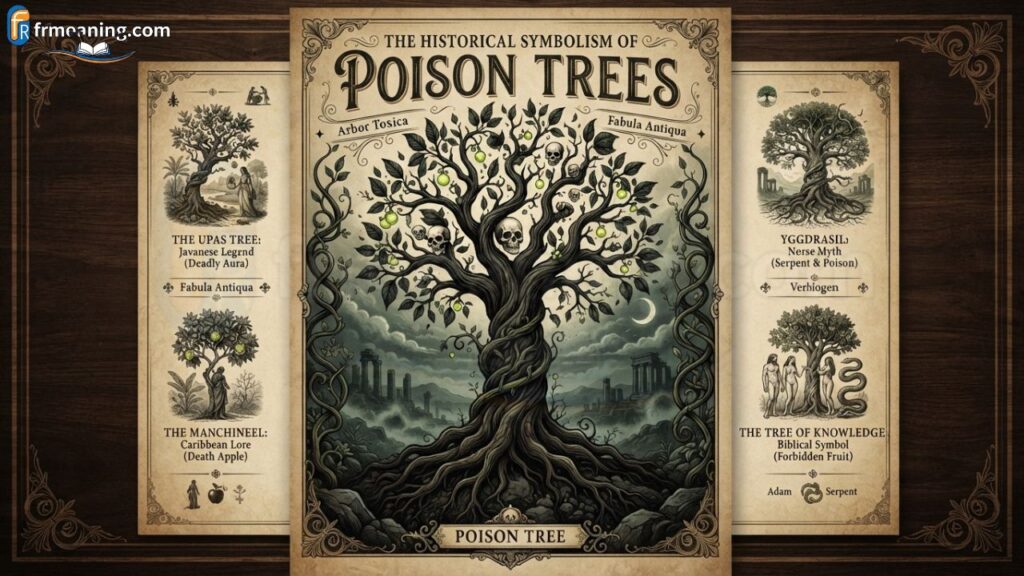
Beyond Blake, the symbol also connects to a handful of older traditions:
- Greek mythology — the golden apples of the Hesperides, beautiful, guarded, and dangerous
- Christian symbolism — the Tree of Knowledge in the Garden of Eden, tied to temptation and forbidden knowledge
- Norse mythology — the serpent Níðhöggr gnawing at the roots of Yggdrasil, decay hiding beneath the surface of life
- Buddhist philosophy — the idea that unaddressed anger poisons the person carrying it more than anyone else
Evolution into Modern Tattoo Art
The poison tree has evolved into a modern symbol used in incredibly varied, artistic tattoo designs. It now reflects emotional complexity and creative expression far beyond its original literary context.
Emotional & Psychological Meaning of Poison Tree Tattoos
This tattoo deeply connects with human psychology, honestly more than most tattoo symbols out there. It reflects how internal feelings shape behavior and identity over time, whether we’re aware of it or not.
Anger and Hidden Emotions
The poison tree often represents suppressed anger and emotional tension that builds quietly. It shows how unexpressed feelings can grow stronger the longer they’re ignored — kind of like a pressure cooker nobody’s watching.
Revenge and Bitterness Symbolism
It can also symbolize long-term resentment and the desire for revenge, reflecting the darker side of emotional experience. Suppressed emotion → transforms into → bitterness or a desire for revenge when it’s never addressed properly.
Emotional Growth and Healing
Despite its dark meaning, the tattoo can absolutely represent healing and self-awareness too. It shows transformation through actually understanding your own emotions instead of running from them.
Internal Conflict Representation
This tattoo visually represents the conflict between different emotions living inside one person. It highlights just how complex human psychology really is — nothing is ever just one feeling.
Psychological Dimension: Why This Symbol Resonates So Deeply (Filling the Gap)
Here’s where a lot of articles stop short, and it’s kind of a shame because this part matters. Modern psychology actually backs up what Blake was writing about back in 1794. Suppressed emotions don’t just disappear because you ignore them — they tend to resurface somewhere else.
Chronic emotional suppression → is linked to → anxiety, depression, and physical stress responses according to research in psychosomatic and clinical psychology. Studies on emotional regulation (a well-documented area within cognitive behavioral psychology) show that people who habitually suppress negative emotions rather than processing them report higher levels of rumination, sleep disturbance, and even elevated cortisol — the body’s primary stress hormone. Basically, the body does keep score, even when the mouth stays shut.
Carl Jung’s concept of the shadow self — the parts of ourselves we bury, deny, or refuse to look at — maps almost perfectly onto poison tree symbolism. Jung argued that acknowledging the shadow, instead of pretending it isn’t there, is the first real step toward psychological integration and wholeness. That’s essentially what this tattoo does symbolically: it drags the shadow into the light and makes it permanent, visible, undeniable.
People who get a poison tree tattoo are, in a lot of ways, doing shadow work in ink. It’s not about celebrating darkness for its own sake — it’s an act of acknowledgment, and honestly that takes a certain kind of self-awareness most people avoid.
Who Gets a Poison Tree Tattoo — and Why
This isn’t usually a tattoo people grab off the flash wall on impulse. The people who wear it tend to have a pretty specific reason behind the choice.
- Those who grew up suppressing emotions. Many describe households where expressing anger openly just wasn’t safe or welcome, so they learned to smile through frustration instead.
- Survivors of toxic relationships. The design speaks directly to people who’ve experienced betrayal, whether romantic, familial, or professional.
- Literature lovers and creative thinkers. Blake’s poem connects to a long tradition of dark romanticism, and fans of gothic art or Edgar Allan Poe often find the symbol fits their worldview naturally.
- Those in emotional recovery. The poem gets read as an invitation to release buried pain, not just a warning about the consequences of holding it in.
Spiritual Meaning of Poison Tree Tattoo
Spiritually, the poison tree symbolizes awareness, transformation, and moral growth. It reflects a kind of journey from darkness toward understanding and balance, which a lot of wearers find genuinely meaningful.
Sin and Temptation Symbolism
It represents moral struggles and human weaknesses in a pretty direct way. This symbolism shows how temptation, left unchecked, can shape emotional growth in either direction.
Karma and Consequences
The tattoo reflects the idea that actions and emotions carry lasting effects — nothing exists in a vacuum. It symbolizes taking responsibility for your own choices instead of blaming outside forces.
Inner Darkness vs Light
This highlights the balance between positive and negative forces within a single person. It represents self-awareness and, ideally, emotional truth rather than denial.
Poison Tree Tattoo Meaning in Relationships

In relationships, the poison tree tattoo reflects emotional tension, hidden feelings, and the consequences of things left unspoken. It symbolizes how silence and unresolved issues can slowly grow and quietly damage a connection.
Toxic Relationships Symbolism
This meaning highlights unhealthy emotional patterns and negative cycles within relationships that don’t get addressed. Unresolved conflict → leads to → toxic relational patterns over time, which is exactly what this variation of the symbol points at.
Betrayal and Trust Issues
The poison tree can represent broken trust and the emotional wounds caused by betrayal specifically. It shows how pain grows bigger if it’s never actually addressed head-on.
Letting Go and Closure
This tattoo can also symbolize healing and moving forward from a past relationship or hurt. It represents real growth after emotional pain, not just surviving it.
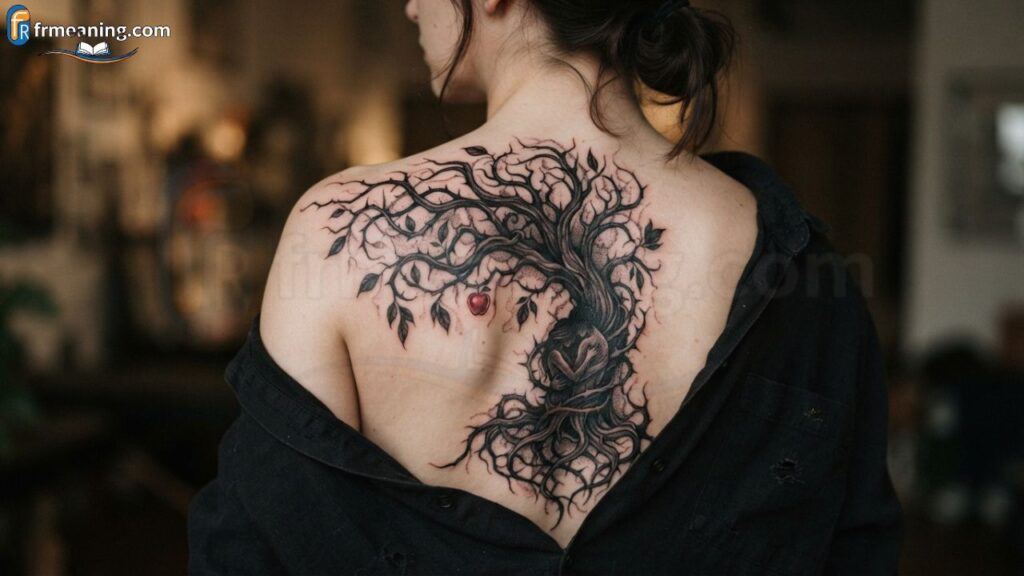
Popular Poison Tree Tattoo Design Ideas
Design plays a huge role in expressing the deeper meaning behind this tattoo. Each style adds its own layer of interpretation.
Minimalist Poison Tree Tattoos
Minimalist designs focus on simplicity while still carrying strong meaning underneath. Clean lines, thin branches, minimal shading — subtle but still powerful symbolism.
Dark Gothic Tree Designs
These emphasize the darker emotional and psychological aspects of the tattoo pretty heavily. Twisted branches, deep shadow work, and heavy contrast create a dramatic, intense look. Often paired with ravens, skulls, or a full moon for extra atmosphere.
Realistic Poison Tree Tattoos
Realistic designs bring the tree to life with intricate bark detail and depth. They’re ideal for people who want a strong visual presence on the skin.
Blake-Inspired Illustration
Some wearers go a step further and incorporate handwritten lines from the actual poem, etched along the branches or beneath the roots. This makes the literary connection explicit and deeply personal.
Half-Dead, Half-Living Tree
One side blooming, the other decaying — this design captures duality perfectly. It represents the coexistence of healing and pain rather than one replacing the other.
Serpent and Fruit Motif
A nod to temptation and forbidden knowledge, this design pairs a coiled snake with a glowing apple, echoing both Blake’s poem and biblical symbolism at once.
Symbolic Elements Combined with Poison Tree Tattoos
Combining extra elements enhances the storytelling and emotional impact of the design quite a bit.
- Skulls and death symbols — mortality, rebirth, acceptance of endings
- Ravens and birds — mystery, intelligence, transformation, watchfulness
- Apples and forbidden fruit — temptation, desire, hidden truth, consequence
- Roots and broken branches — personal history, struggle, and recovery
Color Symbolism in Poison Tree Tattoos
Color dramatically changes how this tattoo actually reads visually and emotionally.
| Color | Meaning |
|---|---|
| Black and grey | Internal, serious, reflective — the most common choice |
| Deep red | Passion, resentment, slow-burning anger |
| Dark green | The slow, organic growth of something left unaddressed |
| Blue or teal | An unsettling, almost supernatural resentment |
| Muted earth tones | Groundedness, resilience, survival after hardship |
Placement Ideas and Their Meaning
Placement affects how visible, and how personal, your tattoo feels day to day. It also changes how the poison tree tattoo meaning gets expressed in everyday life.
Arm and Forearm Tattoos
These placements are highly visible and often chosen for open self-expression. The forearm specifically remains the most popular choice — visible to you constantly, and to others in most social settings, which mirrors confronting emotional truth rather than hiding it.
Back and Shoulder Placement
These areas allow for larger, more detailed designs with room to breathe. They often represent deeper, more private meanings that aren’t meant for casual conversation.
Chest and Heart Area
This placement connects the tattoo directly to emotion and inner feeling. It’s often chosen for the most personal, vulnerable meanings someone carries.
Ribs, Spine, and Other Private Placements
Ribs offer a private, personal reminder meant for you rather than the world. The spine suggests spiritual alignment and strength rising from the core, while the neck signals boldness and exposed vulnerability all at once.
Poison Tree Tattoo Meaning in Different Cultures
The meaning of the poison tree shifts a bit depending on cultural lens, though the core idea of hidden danger stays fairly consistent.
Western Interpretation
In Western culture it’s strongly linked to literature and emotional symbolism, reflecting personal struggle and moral lessons drawn straight from Blake.
Religious and Biblical Meaning
The poison tree connects with themes of sin, temptation, and consequence, echoing the Tree of Knowledge narrative from Genesis.
Mythological Symbolism
In mythology, trees generally represent life and knowledge, but poison trees specifically reflect imbalance and hidden danger lurking beneath the surface.
Aftercare, Healing Time, and Cost (Filling the Gap)
This is the part most competitor guides skip completely, and honestly it’s kind of an important gap to fill before anyone commits to this design.
Session length varies a lot depending on style and size. Simple minimalist line-art designs might only take 2–4 hours in a single sitting. Detailed gothic or realistic poison tree pieces — especially large back pieces or full sleeves — can take anywhere from 8–12 hours, often spread across multiple sessions over several weeks.
Healing typically follows the standard tattoo timeline:
- Days 1–3: redness, swelling, and tenderness around the design
- Days 4–14: peeling and itching as the top layer heals (avoid picking!)
- Weeks 3–6: deeper healing beneath the surface continues
- Month 2 onward: full healing, with color and shading settled
Dark, heavily shaded pieces like gothic poison trees tend to hold ink well over time, though touch-ups every few years help maintain crisp linework, especially on high-friction areas like hands or feet. Cost depends heavily on your artist’s experience and location, but expect anywhere from $100–$300 for a small minimalist piece, and $600–$1500+ for a large, detailed gothic or realistic design across multiple sessions.
Pros and Cons of Getting a Poison Tree Tattoo
Like any tattoo, this design carries both strengths and potential drawbacks worth thinking through.
- Strong symbolism and genuine emotional depth
- Timeless meaning that tends to hold up over years
- Possible misinterpretation by people unfamiliar with the symbolism
- Meaning that may naturally evolve as you personally grow and change
How to Choose the Right Poison Tree Tattoo Design
Matching the design to your personality matters more than chasing a trend. Think about your own story first — what specific emotion or life chapter are you actually trying to mark permanently? From there, consider style and size (minimal vs. detailed), whether you want personal elements like dates or quotes woven in, and always, always consult an experienced tattoo artist who’s actually done gothic or fine-line botanical work before, not just whoever’s available that week.
Finsal Words
The poison tree tattoo meaning is deeply tied to emotion, psychology, and personal transformation. Rooted in William Blake’s centuries-old poem and layered with mythological, biblical, and psychological symbolism, it speaks to anyone who’s felt the slow weight of unspoken anger or lived through the fallout of buried pain.
It isn’t dark for the sake of being dark it’s a symbol worn by people who understand what emotional honesty actually costs, and what suppression eventually destroys.
FAQs
What does a poison tree tattoo mean?
It represents hidden emotions, mainly anger and resentment, that grow destructive over time when never expressed.
Is a poison tree tattoo negative?
Not necessarily — it acknowledges darkness while also symbolizing healing, awareness, and personal transformation.
Does it have to reference William Blake?
No, though Blake’s 1794 poem remains the most recognized literary origin behind the symbolism.
What does it mean in relationships?
It reflects toxic patterns, betrayal, broken trust, or the closure that follows emotional healing.
What elements pair well with this tattoo?
Ravens, serpents, apples, skulls, and gothic script all add extra symbolic layers commonly.
How long does the tattoo take to complete?
Minimalist designs take 2–4 hours; detailed gothic or realistic pieces can take 8–12 hours total.
Is it a good choice for spiritual tattoos?
Yes, it represents transformation, moral awareness, and emotional balance across several cultural traditions.