

For most labs, ordering peptides has been a routine purchase. Someone compares a few suppliers, checks that a COA is available, and places the order. Once the vials arrive, the supplier rarely comes up again unless a batch misbehaves.
That routine looks different this year. Throughout 2026, the FDA has been reviewing how online peptide sellers present their products, and several have received warning letters. For a lab, the practical question is what that means for buyers.
The answer comes in two parts. A supplier’s marketing now carries regulatory weight, while its paperwork still has to prove what is actually in the vial. Judging US peptide vendors 2026 means looking at both, starting with what changed.
FDA Warning Letters Changed the Picture for Peptide Sellers
In April, the FDA published seven warning letters, each dated March 31, 2026, to peptide sellers marketing GLP-1 analogs such as retatrutide and tirzepatide. A second group followed when the agency posted letters to five more online sellers on September 1, 2026, all dated August 24.
The reasoning behind them matters more than the headlines. FDA does not read intent from the disclaimer alone; it infers it from the full context of a seller’s website, including product descriptions, marketing claims, and accompanying products. In one August letter, the agency pointed to bacteriostatic water marketed alongside a peptide guide and a peptide calculator as resources for preparing an injectable drug.
One detail is easy to miss. These letters came from website reviews; the FDA did not test the vials. A warning letter says nothing about purity, and a clean record doesn’t prove it either.
USA Peptide Manufacturer, Vendor and Reseller
Not all peptide companies in USA make what they sell. Many are resellers that import bulk material and repackage it. That model isn’t automatically a problem, but it changes what you should ask.
A USA peptide manufacturer controls synthesis, purification, and fill within one supply chain, so it can usually answer detailed questions about a lot’s history. A reseller depends on its upstream source and may only hold the COA that source provided.
| What to Check | Manufacturer | Reseller |
| Synthesis control | Own production records | Depends on upstream supplier |
| COA source | Linked to its own lots | Often the supplier’s COA |
| Lot traceability | Synthesis to shipment | May stop at import |
| Technical answers | Usually detailed | Often limited |
A Practical Checklist for US Peptide Vendors 2026
1. Start with the COA and read it properly. It should show the lot number, the HPLC chromatogram with a purity figure, and mass spectrometry data comparing the observed molecular weight with the expected value. The testing lab should be named, so you can confirm it exists.
2. Next, look for net peptide content. HPLC purity only describes the peptide fraction. Water and counterions such as TFA also add weight, so a vial that tests at 99% purity can hold noticeably less actual peptide. Vendors that report both numbers are giving you more usable data.
3. Then read the website the way a regulator would. Compounds should be described in scientific terms on product pages. Health claims, weight loss language, or pages that read like administration guides are warning signs, both legally and as a signal of how the company views its lab customers.
Handling and Traceability
- Most peptides ship lyophilized and hold up best at minus 20°C or colder, away from light and moisture.
- Aliquoting on arrival limits freeze-thaw damage.
- Keep the lot number, receipt date, and COA file together. If a vendor stops operating, that record becomes your only lot history.
Apex Peptides Lab and the Documentation Standard
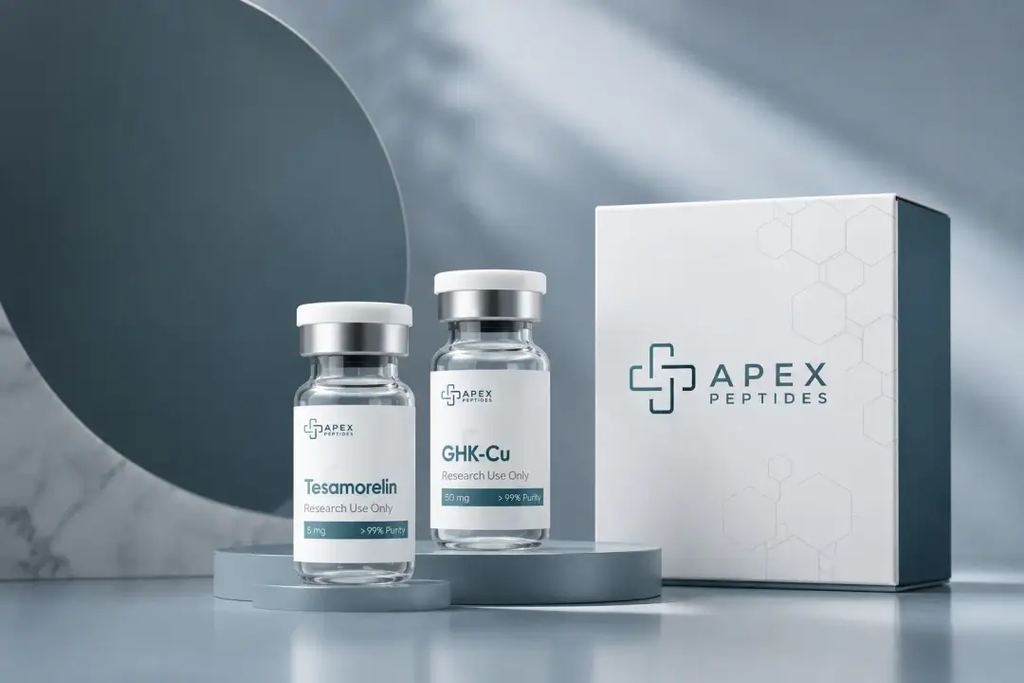
Apex Peptides Lab describes itself as a USA-based company that manufactures in the United States, tests each batch by HPLC, and has accredited US labs verify purity and identity. It publishes COAs on its website and labels its catalog for research use only.
Labs should still apply the same checks used for any supplier:
• Request the COA for the exact lot
• Confirm the testing lab
• Compare the mass spec result with the expected weight
If the documents from Apex Peptides Lab hold up, that’s a stronger reason to order than any product description.
Questions Labs Ask About US Peptide Vendors 2026
Does a “research use only” label make a peptide sale compliant?
Not by itself. FDA’s 2026 letters make clear that the agency judges intended use from the whole website, not the disclaimer alone.
What is the difference between a peptide vendor and a manufacturer?
A manufacturer synthesizes and purifies peptides itself. A vendor may simply resell material made elsewhere.
Do FDA warning letters mean a vendor’s peptides are low quality?
No. The 2026 letters focused on marketing and intended use, not vial testing. Quality still has to be confirmed through COA data.
Why does net peptide content matter?
It tells you how much of the vial’s weight is actually peptide, which affects every concentration you calculate.
The Standard Worth Holding Suppliers To
The market for US peptide vendors 2026 looks different than it did a year ago. Regulators are reading websites closely, and some sellers have already been named. For labs, the answer is fairly old-fashioned: order from peptide companies in USA that document every lot, name their testing labs, and keep their marketing strictly scientific. That standard protects both your data and your supply chain.
