

Identity verification is a routine responsibility for businesses operating in age-restricted industries. Bars, nightclubs, liquor stores, tobacco retailers, and entertainment venues regularly examine identification documents to determine whether customers meet legal age requirements. For many establishments, this process still depends primarily on employees visually inspecting driver’s licenses or identification cards.
Although visual inspections remain an important part of identity verification, relying on them exclusively can expose businesses to significant risks. Counterfeit identification, unfamiliar document formats, employee fatigue, and increasingly sophisticated printing technologies can make fraudulent documents difficult to recognize.
Understanding these challenges can help business owners develop more effective verification procedures while maintaining efficient customer service.
Why Visual Identity Checks Remain Common
Manual identification checks are widely used because they are simple, familiar, and generally require minimal equipment. Employees examine identification photographs, confirm dates of birth, and look for obvious inconsistencies.
For smaller businesses, this approach may appear sufficient, particularly when customer traffic is relatively low.
However, visual inspections depend heavily on individual judgment. Two employees examining the same document may reach different conclusions, especially if they have received different levels of training.
An experienced bartender may recognize suspicious printing or unusual document characteristics, while a newly hired employee might overlook the same details.
These differences can make verification procedures inconsistent across shifts and locations.
Businesses should therefore view visual examination as one component of a broader verification strategy rather than a complete solution.
The Growing Difficulty of Recognizing Counterfeit Documents
Counterfeit identification has become a persistent concern for businesses responsible for enforcing age restrictions.
Advances in printing technology and digital document design have made it possible for fraudulent identification to imitate some visual characteristics of legitimate government-issued documents.
Although poorly manufactured counterfeit cards may contain obvious errors, other documents can be harder to identify during a brief inspection.
Employees should understand how to Spot fake id warning signs by checking relevant document features, comparing photographs carefully, and looking for inconsistencies in printed information.
However, the absence of visible problems does not necessarily establish authenticity.
Identification documents can vary considerably between jurisdictions, and legitimate cards may include unfamiliar designs or recently updated security features.
Without appropriate training, employees may mistakenly accept suspicious identification or question legitimate customers unnecessarily.
A consistent verification process helps reduce both possibilities.
How Online Counterfeit Markets Complicate Verification
Online platforms have increased awareness of counterfeit identification products and services.
Websites, social media discussions, and online communities sometimes promote documents claimed to resemble official driver’s licenses or identification cards.
Names such as idgod have become associated with discussions about counterfeit identification and the risks surrounding unauthorized document providers.
Promotional claims about counterfeit identification should not be treated as reliable evidence of authenticity or effectiveness.
For businesses, the central concern is that individuals may obtain fraudulent documents through online sources and attempt to use them in age-restricted environments.
These marketplaces can also create risks for purchasers, including identity theft, financial scams, and potential legal consequences.
Understanding the existence of such markets reinforces the importance of maintaining verification procedures that do not rely solely on appearance.
Human Error During Busy Business Hours
One frequently overlooked limitation of manual identity verification is the effect of workplace conditions on employee performance.
During busy periods, staff members may need to check dozens or even hundreds of identification documents while managing other responsibilities.
Nightclub employees may inspect identification under poor lighting and pressure from long entrance lines. Retail workers may conduct age checks while handling payments and responding to customer questions.
These conditions increase the likelihood of rushed decisions.
Fatigue and repetitive tasks can also reduce attention to detail, particularly during long shifts.
An employee who carefully examines the first several identification documents may gradually begin relying on quick visual impressions.
Businesses should recognize that even capable employees can make mistakes when verification procedures depend entirely on sustained attention.
Clear workflows and appropriate technological support can reduce unnecessary pressure on staff members.
Why Different Identification Formats Create Challenges
Driver’s licenses and identification cards are not identical across jurisdictions.
Different states and countries use varying layouts, colors, security features, expiration formats, and document numbering systems.
These variations can make it difficult for employees to determine whether an unfamiliar card is legitimate.
A document that appears unusual may simply belong to another jurisdiction, while a counterfeit card may imitate a familiar format.
Employees should have access to appropriate reference materials and know how to handle identification they cannot confidently evaluate.
Training should emphasize careful examination rather than assumptions based on a document’s general appearance.
Businesses should also establish procedures for requesting additional review when employees encounter questionable identification.
How Digital Verification Tools Can Reduce Certain Risks
Digital identification technology offers businesses additional options for supporting age verification.
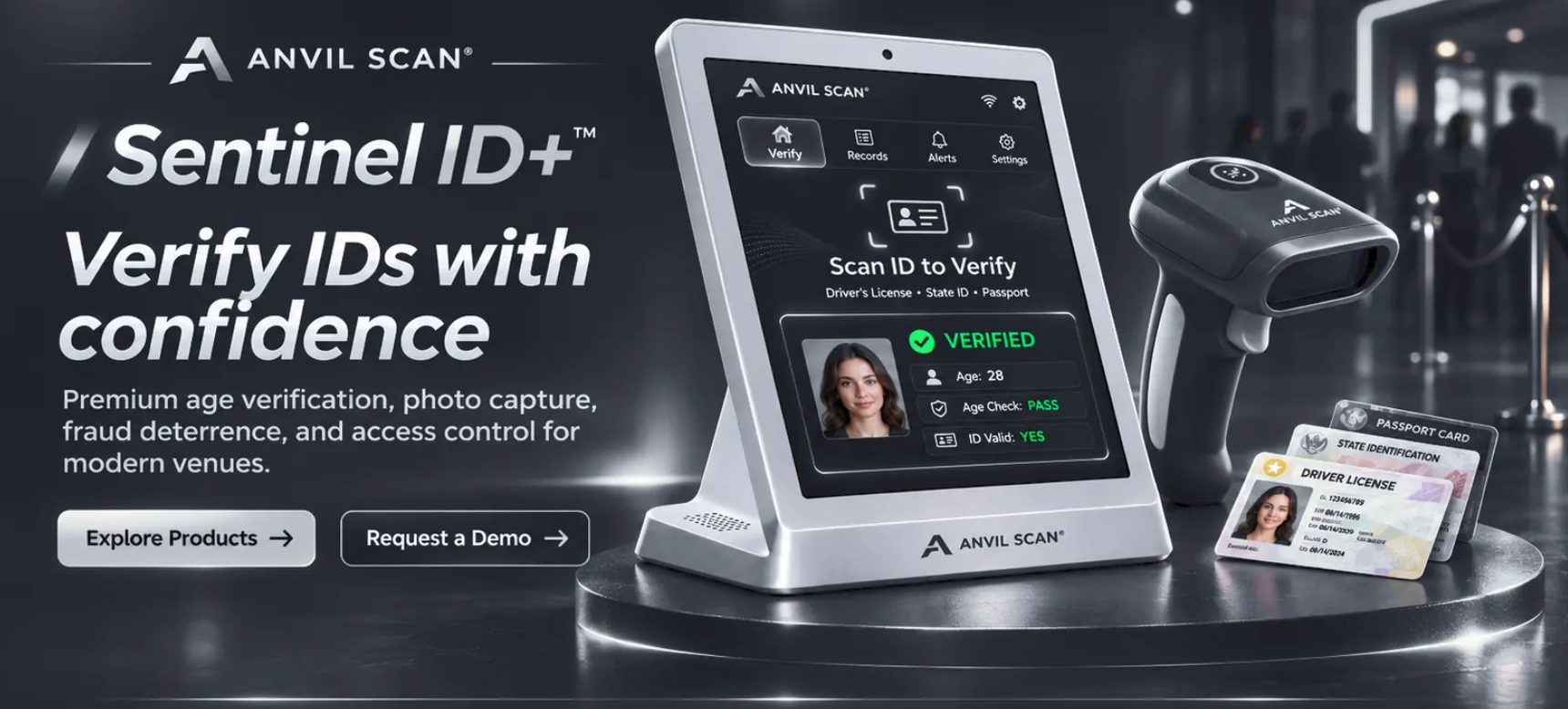
Modern scanning systems may read compatible identification documents, extract encoded information, and calculate customer ages automatically.
Some products also offer data consistency checks or additional document authentication features.
Businesses researching appropriate equipment may consider providers such as anvil scan while comparing available verification solutions.
Automated age calculations can reduce mistakes that occur when employees manually interpret dates of birth, especially during busy operations.
Digital systems may also help standardize certain aspects of the verification process across different employees.
However, scanning a document does not automatically confirm that it is genuine.
A basic barcode reader may successfully extract information from a counterfeit document without detecting the underlying fraud.
Businesses should understand the capabilities and limitations of each system before relying on its results.
Technology should strengthen employee decision-making rather than create a false sense of security.
The Importance of Combining Multiple Verification Methods
A layered approach to identity verification can help businesses address the weaknesses of individual methods.
Rather than depending exclusively on visual inspection or electronic scanning, employees can use multiple relevant checks.
These may include examining the document’s physical condition, comparing the identification photograph with the customer, checking date-of-birth information, and using appropriate verification equipment.
When inconsistencies appear, employees should follow established procedures for additional review.
This approach acknowledges that no single verification method is perfect.
A convincing-looking document may contain questionable data, while an electronically readable card may still require physical inspection.
Combining methods can help employees make more informed decisions without assuming that any one indicator establishes authenticity.
Employee Training and Consistent Policies
Technology alone cannot correct weak verification policies.
Businesses should provide employees with clear guidance on when identification must be requested, which documents are acceptable, and how suspicious identification should be handled.
Training should explain common warning signs, relevant legal requirements, and the limitations of verification equipment.
Employees should also understand when they are expected to involve supervisors.
Consistent policies reduce uncertainty and help prevent verification standards from changing depending on who is working.
Periodic refresher training can support long-term compliance by reinforcing good practices and addressing new identification formats.
For businesses operating multiple locations, standardized procedures can also improve operational consistency.
Customer Privacy and Responsible Data Handling
When businesses introduce electronic verification tools, they must consider how customer information is handled.
Identification documents often contain sensitive personal details, including residential addresses, dates of birth, and license numbers.
Organizations should determine whether their equipment stores customer information and whether that storage is necessary.
Appropriate safeguards may include restricting employee access, limiting retention periods, and securing stored data.
Businesses should review applicable privacy laws and clearly communicate their practices when required.
Responsible verification should protect customers from unnecessary data exposure while supporting legitimate age-checking requirements.
The Financial and Operational Consequences of Weak Verification
Inadequate identity verification procedures can create financial and reputational problems.
Depending on the jurisdiction and circumstances, violations involving age-restricted sales or entry may result in penalties, licensing consequences, or other enforcement actions.
Businesses may also experience operational disruption when employees are uncertain about how to respond to questionable identification.
Inconsistent procedures can create disagreements with customers and additional pressure on management.
Investing in staff education, clear policies, and appropriate tools can help address these risks.
However, businesses should not assume that purchasing scanning equipment automatically satisfies all legal requirements.
Compliance ultimately depends on applicable regulations and how verification procedures are implemented.
Conclusion
Visual identity checks remain valuable, but they have important limitations that businesses should not ignore.
Counterfeit documents, online identification markets, employee fatigue, and unfamiliar document formats can make manual verification increasingly challenging.
A more dependable approach combines trained employees, consistent policies, careful document examination, and suitable digital verification technology.
By recognizing the hidden risks of visual-only inspections, businesses can strengthen their verification practices, improve operational consistency, and better protect their customers, employees, and licenses.
