

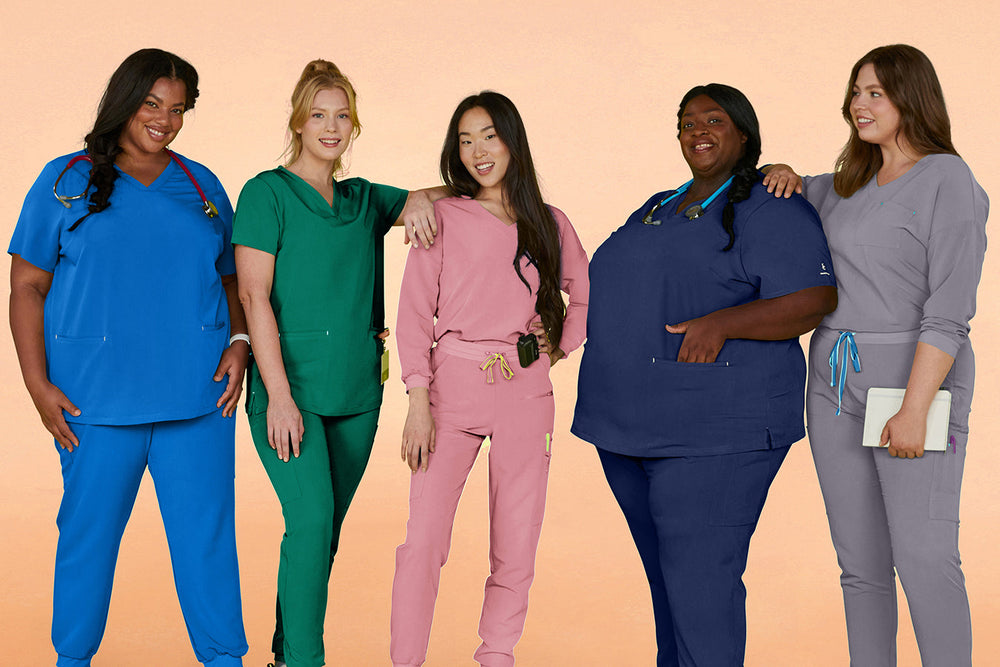
A busy healthcare shift can involve hours of walking, bending, reaching, and moving between different tasks with very little time to pause. In that environment, clothing becomes part of the working experience. A top that pulls across the shoulders or trousers that need constant adjustment can become increasingly distracting as the day goes on. Comfortable workwear makes it easier to move through those everyday responsibilities without repeatedly thinking about what you are wearing.
Choosing the right medical scrubs involves more than picking a colour and selecting your usual size. Fabric, fit, pocket placement, ease of care, and workplace requirements all influence how useful a set will be. Personal preferences matter too. Some people prefer a relaxed silhouette, while others feel more comfortable in a tailored design with enough stretch to support movement. The best choice balances these needs instead of relying on appearance alone.
Workwear needs can also change over time. Pregnancy, changes in body shape, different job responsibilities, and shifts between clinical environments can all affect what feels comfortable. Understanding how to assess scrubs makes it easier to build a practical wardrobe that supports your working day, including periods when standard uniform options no longer provide the fit you need.
Start with the demands of your working day
Before comparing styles, consider what a typical shift actually involves. Someone working in a fast-paced ward may spend much of the day walking and assisting with patient care. A dental professional may regularly lean forward or remain seated while working closely with patients. A receptionist in a healthcare setting may divide their time between desk work and moving around the practice. Each role places slightly different demands on clothing.
Think about the movements you repeat most often. If you frequently reach above shoulder height, the cut of the sleeves and upper back deserves attention. If your work involves bending or sitting for extended periods, the waistband and trouser rise become especially important. Scrubs should remain comfortable across these movements rather than fitting well only when you are standing still.
The environment matters as well. Air-conditioned rooms, warm treatment spaces, and movement between indoor and outdoor areas can create changing temperature needs. A lightweight uniform may work well in one setting, while another requires room for an approved undershirt or outer layer. Choosing workwear around your real routine is usually more useful than choosing it around a product photograph.
Understand what different fabrics offer
Fabric affects how scrubs feel when first worn, how they behave during a shift, and how well they hold up to repeated washing. Cotton, polyester, and elastane are common components, often combined in different proportions. Each contributes something different, and the overall performance depends on the blend and construction rather than a single fibre name.
Cotton can provide a soft feel and absorb moisture, although cotton-rich garments may crease and take longer to dry than some synthetic blends. Polyester is often used for durability and ease of care. Elastane adds stretch, allowing a garment to move more easily with the wearer. However, a high stretch content does not automatically mean a better uniform. The fabric should also recover its shape instead of becoming loose around the knees, seat, or elbows.
Weight is another consideration. Very thin material may feel light but offer less coverage than expected under bright lighting. Heavier fabric can feel more substantial, although it may be less comfortable in a warm environment. If possible, assess the material in person and gently stretch it to see whether its appearance changes noticeably. Online descriptions can help, but fabric composition, close-up photographs, and a clear returns policy provide a more useful picture than broad claims about comfort.
Choose a fit that supports movement
A good fit gives you space to move without leaving excessive fabric in the way. Scrubs that are too tight can pull across the shoulders, hips, or thighs. A set that is much too loose may slip, bunch, or require repeated adjustment. Neither extreme is ideal for a working day that involves frequent changes in position.
When trying on a top, raise your arms, reach forward, and bend slightly. Notice whether the hem rides up, the neckline shifts, or the fabric becomes tight across your back. For trousers, sit down, walk around, and bend your knees. The waistband should remain comfortable, and the fabric should allow movement without pulling strongly across the seat or thighs.
Trouser length also deserves attention. Hems should not drag on the floor or become caught beneath footwear. Petite and tall options can improve fit considerably, particularly when a standard inseam leaves too much fabric at the ankle or sits higher than intended. Alterations may be useful for some designs, but checking the available lengths before buying can save time and expense.
Sizing can vary substantially between brands and collections. Use the size chart for the specific garment rather than assuming that your usual size will fit. Where available, compare actual garment measurements with a comfortable set you already own. This can be especially helpful when deciding between two sizes.
Look beyond the number of pockets
Pockets are useful only when their placement and shape suit your work. A top with several small pockets may offer less practical storage than one with two well-positioned compartments. Deep pockets can hold items securely, while smaller sections may help separate pens or other workplace-approved essentials.
Consider what happens when the pockets are filled. Heavy items can pull a lightweight top forward or cause trousers to shift at the waist. A pocket that seems convenient while standing may press uncomfortably against your leg when seated. Testing pocket placement with the kinds of items you normally carry can reveal issues that are not obvious when the garment is empty.
More storage is not always better. Carrying unnecessary items adds weight and can make clothing feel cumbersome. Start with the essentials permitted in your setting, then choose a design that accommodates them comfortably. This approach helps you avoid paying for features that add bulk without improving your routine.
Follow workplace requirements before personal preferences
An attractive uniform is useful only if it meets your employer’s requirements. Some workplaces specify colours for different roles, while others have rules about sleeve length, branding, undershirts, or laundering. Confirming these details before placing an order helps prevent purchases that cannot be worn at work.
Colour consistency can be particularly important when buying tops and trousers separately. Two items described as navy or charcoal may differ noticeably if they come from different brands or fabric ranges. If a coordinated appearance matters, buying within the same collection usually reduces this risk.
Cleaning requirements should also influence fabric selection. Check whether the garment’s care instructions are compatible with your workplace’s laundering process. Do not assume that every scrub set can tolerate the same washing temperature or drying method. Where your employer provides specific uniform handling instructions, use those as the starting point for deciding what to buy.
Recognise when pregnancy changes your workwear needs
Pregnancy can change how clothing fits around the abdomen, bust, hips, and waist. These changes do not happen at the same pace for everyone, and a uniform that feels comfortable one month may become restrictive later. Waiting until clothing is difficult to wear can make purchasing decisions feel rushed.
Simply buying a larger standard size may provide temporary room, but it can also create problems elsewhere. The shoulders may become too wide, the neckline may sit differently, and the trousers may feel loose through the legs while still uncomfortable around the waist. Purpose-designed maternity options aim to accommodate changing proportions more thoughtfully.
For professionals comparing maternity scrubs Australia, it helps to look closely at adjustable features, garment measurements, available inseam lengths, and delivery or exchange arrangements. These practical details can matter as much as the overall style, particularly when ordering online and trying to anticipate how your fit requirements may change.
Compare maternity waistband designs carefully
Maternity trousers commonly use either an over-bump panel or a waistband designed to sit below the bump. An over-bump panel provides additional coverage and may feel secure to some wearers. Others prefer a lower waistband because they find a full panel too warm or dislike fabric covering their abdomen. Comfort is individual, so neither style should be treated as the automatic choice.
A waistband should feel comfortable while sitting as well as standing. Check for rolling, slipping, or concentrated pressure at the front or sides. Adjustable elements can offer flexibility, but they should be easy to use and should not create bulky areas beneath the top.
Pay attention to the rest of the trousers too. A comfortable maternity waistband cannot compensate for a restrictive cut through the hips or thighs. The rise, leg shape, and fabric stretch all contribute to how the garment feels across a full shift. If possible, try different designs before committing to multiple pairs.
Choose maternity tops with enough length and flexibility
As the abdomen grows, a standard top may ride upward even when it still feels wide enough. Additional front length can help maintain coverage during movement. Side panels, gathers, or adjustable details may provide room without requiring an oversized fit through the shoulders.
The neckline and sleeves should still sit comfortably. A maternity top does not need to feel shapeless, but it should avoid pulling across the bust or abdomen. Reach forward and lift your arms during a fitting to check whether the top moves easily and returns to a comfortable position.
Pocket placement may also feel different as your shape changes. Front pockets that were previously easy to reach can become less convenient, and carrying heavier items near the abdomen may feel awkward. A lighter pocket load or a different pocket arrangement can make the uniform more comfortable without changing the entire outfit.
Plan purchases around changing needs
It can be tempting to buy several identical sets as soon as you find a style you like. During pregnancy, a more gradual approach may be useful because your preferences and measurements can change. Starting with a small number of suitable pieces allows you to assess how they perform before expanding your wardrobe.
Follow the brand’s maternity sizing guidance rather than automatically choosing your pre-pregnancy size or sizing up. Different manufacturers use different approaches, and some designs already include substantial room for growth. Current measurements and the stated fit guidance are more reliable than a general rule.
Think about your weekly schedule and washing routine as well. You need enough clean uniforms to meet workplace expectations, but the exact number depends on how often you work and how quickly laundry can be completed. A manageable rotation with a spare set can help reduce last-minute washing without encouraging unnecessary purchases.
Assess quality through everyday details
Price alone does not reveal how well scrubs will perform. Examine stitching around pockets, side seams, and other areas that experience repeated tension. Seams should look even, and closures should feel secure. An elastic waistband should return to shape after gentle stretching rather than remaining visibly distorted.
Fabric recovery matters as much as initial softness. A garment can feel pleasant in the fitting room yet become baggy during wear. Reviews describing longer-term use may offer useful clues, especially when several customers mention the same issue. Still, remember that people wash and wear uniforms differently, so individual reviews are not guarantees.
Consider value in relation to actual use. A comfortable set that meets your workplace requirements and withstands regular care may offer better value than a cheaper option that rarely leaves the wardrobe. At the same time, a higher price does not make an unsuitable fit worthwhile. Prioritise the features that solve your specific workwear needs.
Care for your uniform consistently
Appropriate care helps preserve fit, colour, and fabric performance. Read the care label before the first wash and follow any additional workplace instructions. Some garments tolerate tumble drying, while others require lower temperatures or air drying. Excessive heat can affect certain stretch fabrics and trims.
Empty pockets before laundering and check for items that could damage the garment or stain other clothing. Treat marks using methods suitable for the fabric rather than applying harsh products indiscriminately. Washing similar colours together can also help maintain a consistent appearance.
Inspect your uniforms periodically for thinning fabric, loose seams, worn elastic, or pockets beginning to detach. A garment may still look acceptable from a distance while becoming less dependable in daily use. Repairing minor issues where appropriate, or replacing worn pieces, helps keep your uniform rotation practical.
Comfortable scrubs begin with a clear understanding of your work, your body, and the features you actually use. Fabric and fit deserve close attention, but details such as trouser length, pocket placement, and laundering compatibility often determine whether a uniform becomes a reliable favourite. When your needs change, including during pregnancy, reassessing those details can help you find clothing that continues to work comfortably throughout the day.
