

You opened a message, saw someone type “TF,” and instantly paused. Maybe it showed up in a TikTok comment, a Snapchat streak, or a random WhatsApp chat that suddenly made zero sense. Now you’re wondering if it’s rude, sarcastic, angry, funny, or all four at once.
Yeah. That confusion is normal.
Internet slang moves fast, and abbreviations like TF can completely change tone depending on who’s texting, where they’re posting, and what happened right before the message. One tiny acronym. A dozen possible vibes.
So let’s clear it up properly.
What Does TF Mean in Texting?
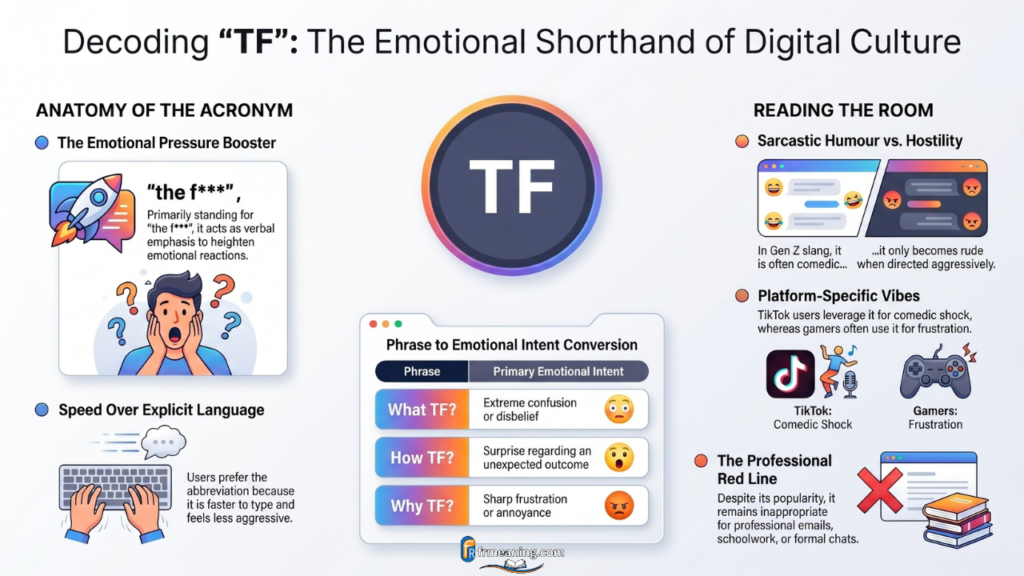
In most online conversations, TF stands for “the f*.”** It’s commonly used to express shock, disbelief, frustration, confusion, or strong emotion.
People usually shorten it because:
- it feels faster,
- less aggressive than typing the full word,
- and more casual in texting slang.
You’ll see TF across:
- TikTok comments
- Snapchat slang
- Instagram captions
- Discord chats
- WhatsApp messages
- meme culture
- gaming communities
TF Full Form Explained
The TF full form is almost always shorthand for:
“The f***”
But people rarely use it alone. It usually appears inside emotional reaction phrases like:
- “What TF?”
- “How TF?”
- “Where TF did it go?”
- “Who TF said that?”
It acts like verbal emphasis. A pressure booster for emotion.
Not elegant. Very internet.
The Most Common Meaning of TF
Here’s the simplest way to interpret TF meaning in text:
| Phrase | Meaning |
|---|---|
| What TF | Extreme confusion or disbelief |
| How TF | Surprise about how something happened |
| Why TF | Frustration or annoyance |
| Who TF | Anger or shock toward a person |
Example:
“How TF did you finish the game already?”
The person isn’t literally asking a calm question. They’re reacting emotionally.
That emotional layer matters.
Why People Use TF in Online Conversations
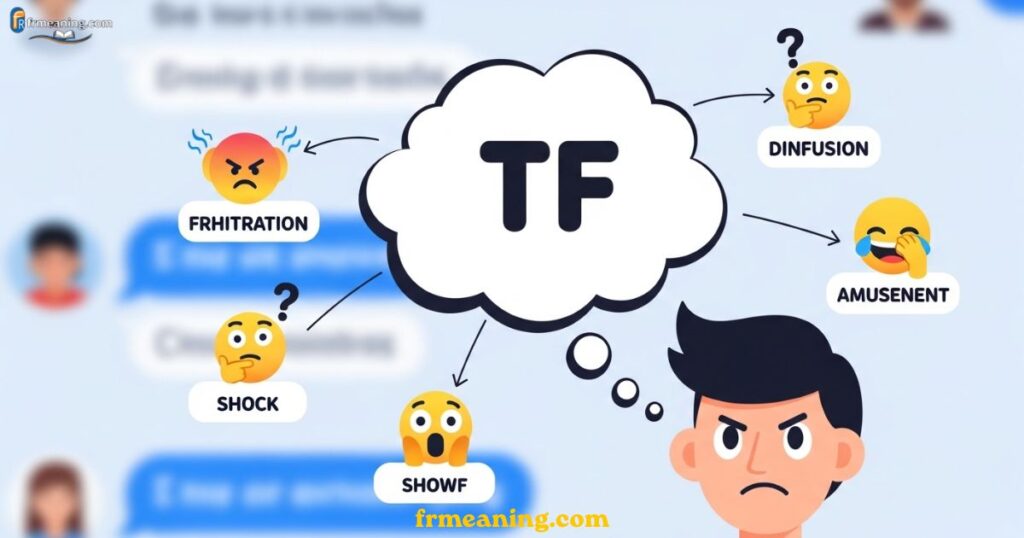
Text messaging strips away facial expressions and voice tone. So people compensate with internet abbreviations, emojis, capitalization, and reaction slang.
TF helps communicate intensity quickly.
Sometimes it’s serious. Sometimes it’s playful chaos.
Expressing Shock or Disbelief
This is the most common use.
People type TF when something feels ridiculous, unexpected, or hard to believe.
Examples:
- “What TF just happened?”
- “TF is going on in this comment section?”
- “How TF did that video get 10 million likes?”
You’ll notice a pattern. The abbreviation usually appears during emotional reactions.
Fast emotions. Fast typing.
Showing Frustration or Confusion
TF also appears during annoyance.
Especially online.
Gaming chats, group texts, Reddit discussions, and social media slang all lean heavily into exaggerated frustration.
Example:
- “Why TF is my WiFi still broken?”
- “Where TF did my homework file go?”
- “TF are these prices now?”
It’s emotional shorthand. That’s why it spreads so easily in digital communication.
Using TF for Humor or Sarcasm
A lot of Gen Z users don’t even use TF aggressively anymore. Sometimes it’s purely comedic.
That’s important.
Tone changed dramatically over the last few years, especially on TikTok and Instagram.
Examples:
- “Bro woke up at 5 AM voluntarily. TF?”
- “This cat pays rent at this point TF.”
- “That plot twist was insane TF.”
In meme language, exaggeration equals humor.
Real Examples of TF in Text Messages
Context decides everything.
The same abbreviation can sound angry, funny, confused, or playful depending on the conversation.
TF in Casual Chats
Here are realistic texting examples you’ll actually see:
Friend Chat
“TF you mean you forgot the tickets?”
Gaming Group
“How TF are they level 90 already?”
Family Group
“TF happened to the kitchen?”
School Conversation
“Why TF was the exam so hard?”
Notice something?
The abbreviation rarely carries meaning by itself. It amplifies emotion already present in the sentence.
TF on TikTok, Snapchat, and Instagram

Platform culture changes how slang feels.
On TikTok:
- TF often appears in reaction comments
- users exaggerate emotions for humor
- sarcasm is everywhere
Example:
“TF did I just watch?”
On Snapchat:
- TF appears in casual texting
- reactions feel more personal
- slang moves quickly between friends
Example:
“TF are you doing awake at 3 AM?”
On Instagram:
- TF shows up in captions and memes
- usually paired with emojis or dramatic reactions
Example:
“This weather bipolar TF.”
Different app. Same emotional energy.
Funny TF Meme Examples
Meme culture transformed TF into a reaction phrase more than an insult.
Popular formats include:
- “Me pretending I understand math TF”
- “TF is this update?”
- “When the teacher says group project TF”
It’s exaggerated confusion packaged as comedy.
That’s why younger users barely notice how strong the original phrase actually is.
Is TF Rude or Offensive?
Short answer?
Sometimes.
But not always.
Context controls whether TF sounds harmless or hostile.
When TF Sounds Aggressive
TF becomes rude when:
- directed aggressively at someone,
- written in all caps,
- paired with insults,
- or used during arguments.
Examples:
- “Who TF do you think you are?”
- “TF is wrong with you?”
- “Why TF would you do that?”
Those feel confrontational because the emotional intent is hostile.
Not subtle.
When TF Is Harmless Slang
Among friends, TF often feels casual.
Especially with younger users.
Example:
“TF that outfit actually looks amazing.”
Or:
“How TF are you always lucky?”
In these situations, the phrase works more like exaggerated speech than actual aggression.
Tone matters more than vocabulary.
Situations Where You Should Avoid Using TF
Even though internet culture normalizes abbreviations, TF still contains implied profanity.
So avoid it in:
- professional emails
- school assignments
- workplace chats
- formal conversations
- messages with people you don’t know well
Parents, teachers, and employers may interpret it differently than Gen Z users.
TF vs WTF: What’s the Difference?
People confuse these constantly.
They’re related, but not identical.
Tone Comparison
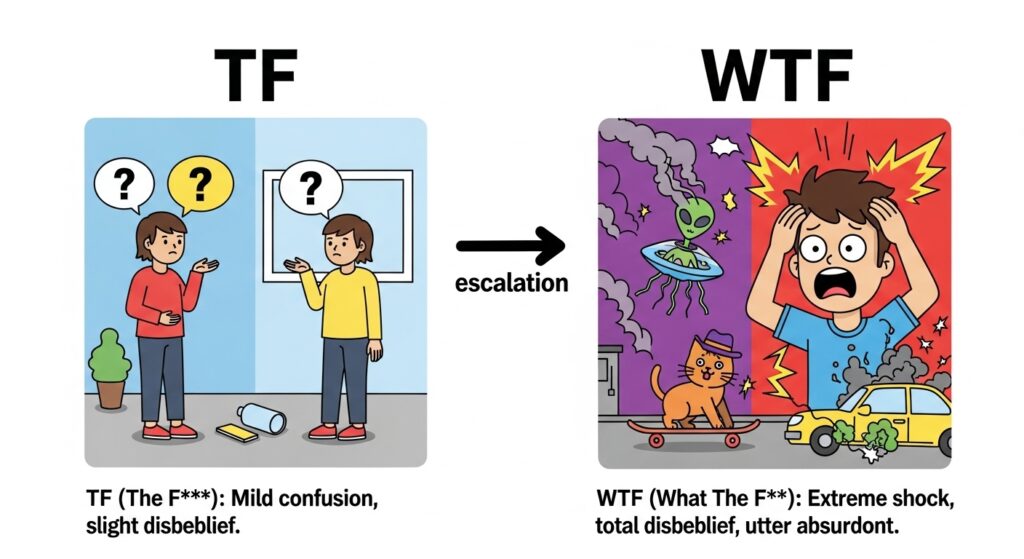
| Term | Tone |
|---|---|
| TF | Softer, abbreviated, casual |
| WTF | Stronger, more explicit |
| What TF | Slightly toned-down reaction |
| What WTF | Rare and exaggerated |
TF often feels like a censored version of WTF.
Less intense. More socially acceptable online.
Which One Is Stronger?
WTF is stronger because the full phrase is more obvious and direct.
TF softens the wording slightly by removing the first word.
That tiny difference changes perception more than you’d expect.
Especially in social media comments.
When People Prefer TF Instead of WTF
Users often choose TF because:
- it looks cleaner,
- avoids moderation filters,
- feels less offensive,
- fits casual texting better,
- and matches meme language trends.
Internet slang constantly evolves toward shorter forms.
TF fits perfectly into that pattern.
Other Meanings of TF You Should Know
Not every TF abbreviation meaning involves texting slang.
Different communities use it differently.
TF in Gaming
Gaming culture has several alternate meanings for TF.
The most common:
- Team Fortress
- Team Fortress 2
- Titanfall
Example:
“Anyone playing TF tonight?”
In gaming chats, context usually makes the meaning obvious.
TF in Internet Communities
Some niche online groups use TF to mean:
- Transformation
- Task Force
- Transfer Function
Anime, sci-fi, and tech communities sometimes use these variations regularly.
Again, context rules everything.
Rare Professional or Technical Meanings
In technical settings, TF may also mean:
- TensorFlow
- Transfer Function
- Time Frame
- Transcription Factor
But if you saw TF inside a Snapchat message or TikTok comment, it almost certainly means the slang version.
Not biotechnology.
How to Respond When Someone Says TF
A lot of users search this because they’re unsure how to reply without sounding awkward.
Good news. Usually you can mirror the tone.
Friendly Responses
If the message feels playful:
- “I know right?”
- “Exactly what I said.”
- “Bro I’m confused too.”
Simple works best.
Funny Replies
Humor fits naturally with meme-style TF usage.
Examples:
- “Surviving somehow.”
- “Magic probably.”
- “Don’t ask questions.”
Internet conversations thrive on exaggerated reactions.
Serious or Calm Responses
If someone sounds genuinely frustrated:
- answer the question directly,
- explain calmly,
- avoid escalating tone.
Example:
“TF happened to the meeting?”
Reply:
“It got moved to tomorrow morning.”
No drama needed.
Frequently Asked Questions About TF Meaning
Does TF Always Mean Something Negative?
No.
TF can express:
- excitement,
- disbelief,
- humor,
- frustration,
- confusion,
- or sarcasm.
The surrounding sentence changes the emotional meaning.
Is TF Popular in 2026?
Absolutely.
TF remains widely used across:
- TikTok comments
- Snapchat slang
- Instagram captions
- Discord chats
- online messaging
- gaming culture
Short acronyms still dominate casual texting because they communicate emotion quickly.
Do Adults Use TF or Mostly Teens?
Mostly younger users.
Gen Z and younger millennials use TF far more frequently than older adults. Still, internet slang spreads fast, so many adults recognize it now even if they don’t actively use it.
Final Thoughts on TF Meaning in Text
TF looks tiny. Two letters. That’s it.
But online, those two letters can express shock, sarcasm, annoyance, humor, confusion, or pure internet chaos depending on context.
That’s why so many people search “What does TF mean in text?” after seeing it in a random conversation and instantly second-guessing the tone.
Why Context Matters Most
The biggest mistake people make with texting slang is assuming every abbreviation has one fixed meaning.
It doesn’t.
TF meaning in chat changes based on:
- platform,
- relationship,
- tone,
- punctuation,
- and surrounding words.
Read the vibe first. Then interpret the acronym.
That approach works for TF, WTF, SMH, FR, TBH, and almost every other piece of modern internet slang floating through your notifications.